
What Matters More for Recovery: Repetition or Consistency?
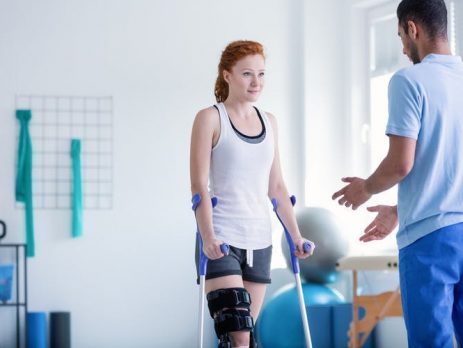
Today we’re answering a common question that we get from our readers and neurorehabilitation device users: “What matters more: repetition or consistency?” To put it more specifically: Should you prioritize repetition or consistency as you work on improving functions affected by stroke, brain injury, spinal cord injury, or cerebral palsy? Let’s find out. How Does Repetition Promote Recovery? Repetition is arguably the most important element of recovery after a neurological injury. This is because it sparks neuroplasticity, which is the brain’s internal mechanism of strengthening frequently used pathways and functions. When a thought or action is practiced through many repetitions (aka, massed practice), specific neurons in the brain...
Video Games for Stroke Patients: How They Help Recovery & Which Ones to Try
A stroke can affect a wide variety of functions including movement, sensation, and cognition. Fortunately, the brain is capable of recovering these functions, and video games can provide an entertaining way to do this. You’re about to discover how the brain and body can recover through fun and interactive video games for stroke patients. How Video Games Can be an Effective Form of Therapy for Stroke Survivors When a stroke impairs certain functions, such as movement or thinking, these functions can often be recovered. The phenomenon responsible for this recovery is neuroplasticity. Neuroplasticity is the brain’s ability to rewire itself and strengthen neural...
Singing Therapy for Aphasia: How to Recover Communication Skills
After a stroke, about 20% of survivors experience a communication disorder called aphasia. It is characterized by difficulties producing or understanding language. Interestingly enough, individuals who cannot speak fluently, or at all, after stroke are often still able to sing. It’s suggested that participating in singing therapy for aphasia may help individuals develop their ability to speak again. Which Part of the Brain is Affected by Aphasia? Before we discuss how singing therapy can help individuals with aphasia recover their communication skills, it’s important to understand some brain anatomy. Speech and language skills are generally regulated by the left hemisphere of the brain. Therefore, when...