

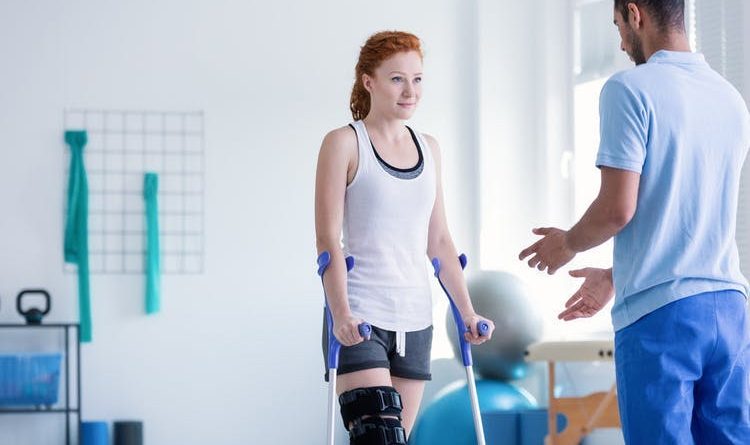
Walking After Stroke: How to Maximize Your Chances of Recovery
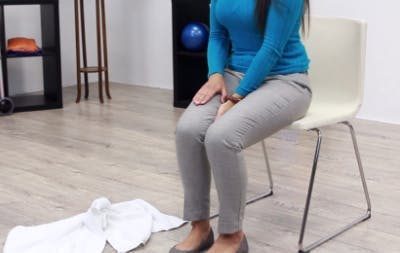
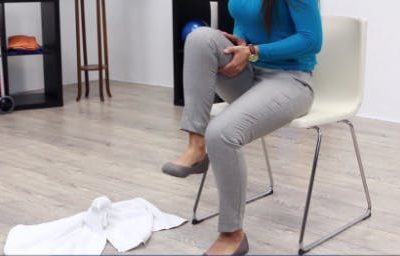
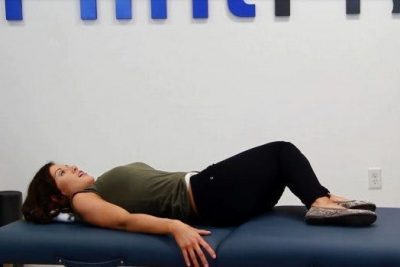
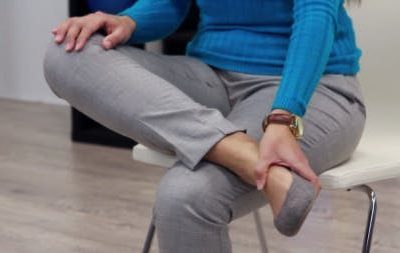
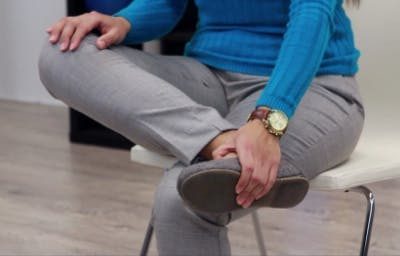
A good exercise for foot drop is ankle dorsiflexion. Cross your affected leg over your thigh and hold your foot in your hand. Then, assist your foot through dorsiflexion by moving the top of your foot back toward your shin and then back down. This can be done passively with assistance until you can practice it actively with no assistance.
Devices to Help Stroke Survivors Walk
Your physical therapist will recommend an appropriate walking device for you as needed.
Walking devices that are used following a stroke can vary greatly depending on your skills. They include front-wheeled walkers, platform walkers, hemi walkers, four-wheeled walkers, quad canes, and single point canes. Over time, your physical therapist may try to help you to transition to less stable walking devices, until you are able to walk without one at all.
It’s important to use any walking device your therapist recommends and also practice rehabilitation exercises consistently.
Following along to written sheets of exercises can be tough due to low accountability and potential boredom. If you struggle with motivation to exercise, then it can be worth exploring exercise devices to help you stick with a home therapy program and see better results.
Here are some exercise devices and machines that help improve your ability to walk after stroke:
Assistive treadmills
Assistive treadmills help support your body while you practice walking. These devices are very expensive and usually offered at rehabilitation facilities. Due to their high cost, it’s often best to take advantage of these resources while insurance still covers therapy and explore other, more-affordable devices that you can use at home.
NuStep
The NuStep is a type of recumbent cross-trainer frequently used in rehabilitation clinics for individuals following a stroke. It allows you to sit while moving both your arms and legs forward and back, alternating sides, in a gentle gliding motion to activate muscles commonly used during walking. Again, these are rather expensive and therefore often best to use during physical therapy sessions.
Stationary Bikes
A good device for recovering your gait at home is a stationary bike. These devices help with gait recovery by targeting your legs through bilateral movement: when both limbs are used in unison to contract the muscles.
This is particularly appealing for individuals with hemiplegia or severe hemiparesis because you can use your non-affected side to assist your affected side, which helps encourage neuroplasticity.
Stationary bikes primarily target your legs and core, so it’s important to combine it with other rehabilitation methods to target the full body.
FitMi home therapy
There aren’t many affordable home rehabilitation devices that are both motivating and target the full body. This is why we created FitMi home therapy, a rehab device that turns your physical therapy exercises into an interactive experience. It’s like having a virtual therapist available right from your computer.
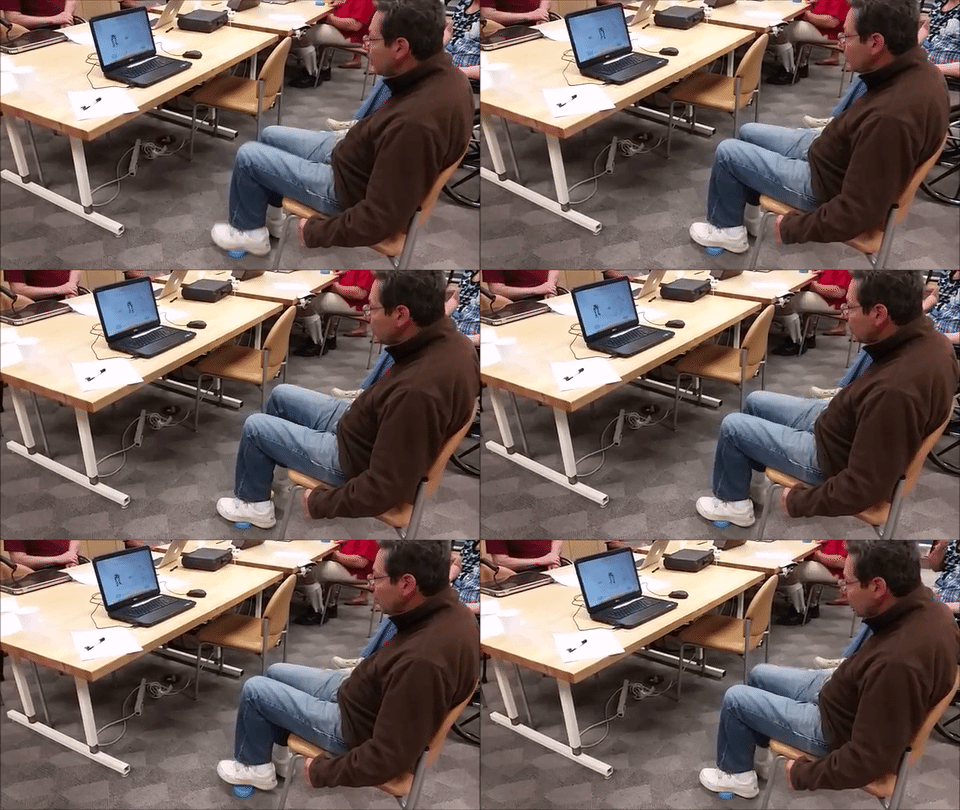
In the image below, you can see a stroke survivor doing leg exercises with FitMi (by stepping on the motion-sensing “pucks” beneath his feet) while following along on the computer.
Many patients have improved their gait by using FitMi consistently at home. See what other survivors have said about it:
“After suffering from a left side hemorrhagic stroke, I have been using the FitMi for 4 months in conjunction with physical therapy and it really has helped. I started with 0 mobility on right side and can now walk without a cane. You really have to put in the work but you should see results.” –Dwayne, stroke survivor
“I have noticed real-world results from using FitMi. For one, I drive one-footed now rather than two-footed because I can target the gas pedal and the brake with my right foot. I can target the cruise control set button with my right hand. These accomplishments are due to the exercises and feedback of the FitMi.” –Ronald, stroke survivor
FitMi encourages you to accomplish high repetition of therapeutic exercises, which helps spark neuroplasticity and rewire the brain. When you use it consistently, you’ll see the best results — like Dwayne and Ronald. You can read more FitMi reviews here.
Task-specific training
Once you are able to walk with assistance, you can start doing task-specific training, which involves directly practicing the skill you want to get better at: walking! The more you walk, the better your gait will become.
Try to walk as much as you can – making sure to use any equipment recommended by your therapist, such as a walker or cane – without overexercising. Pushing yourself too hard can cause other complications such as post-stroke fatigue. Aim for your exercise to help you feel challenged but not exhausted.
Also, as you explore your ability to walk with less assistance, be extremely careful and do so in the presence of a caregiver or therapist to help prevent any tripping or falling. Falling after stroke could result in further reduced mobility and setbacks, so take all the precautions you can to avoid it.
Other Tips for Gait Rehabilitation After Stroke
Of course, there’s more that goes into your gait than just muscle movement. Your vision also deserves attention if you want to improve your ability to walk after stroke.
If you have vision problems, it will negatively impact your ability to walk safely. Your vision is important for navigating the world around you and preventing falls.
Optometrists, neurologists, occupational therapists, and speech-language pathologists are all great resources for improving vision after stroke.
Your therapist or speech-language pathologist can also screen you for a condition called hemineglect, which can cause stroke survivors to be completely unaware of their affected side. This condition must also be addressed before patients can safely walk again after stroke.
Now that you know what goes into gait rehabilitation, let’s look at some statistics about potential recovery chances and timelines.
What Are the Chances of Walking After a Stroke?
Survivors are thought to have a good chance of regaining the ability to walk within 6 months after stroke if they have the ability to sit and balance independently and the ability to contract the muscles of the ankle, knee, and hip.
A study from 2015 found that hemiplegic patients had a 93.8% chance of achieving independent gait within 6 months if could demonstrate these two abilities in the first 72 hours after stroke.
This does not mean that you cannot recover your ability to walk if are unable to achieve these movements. It simply means that rehabilitation may require more effort and hard work through long-term rehabilitation and home exercises.
How Long Does It Take To Walk Again After A Stroke?
Most patients regain the ability to walk within the first 6 months or, when mobility has been severely affected, within the first 2 years following their stroke. Experts can agree that the chances of recovering function after stroke increase with the intensity of rehabilitation.
However, recovery does not happen on its own. It requires consistent, long-term rehabilitation. For instance, one study followed 51 stroke survivors that could not walk 3 months post-stroke. After 2 years of long-term rehabilitation, researchers found that 74% of patients had regained their capacity to walk without assistance.
We cannot stress enough that rehabilitation is the key to stroke recovery. When it’s neglected, survivors are unlikely to reach new milestones. A sobering study found that stroke patients without long-term rehabilitation stagnate. Their level of mobility measured 5 years post-stroke was equivalent to levels measured just 2 months post-stroke.
This demonstrates the importance of long-term rehabilitation for anyone that wants to keep recovering – especially individuals that want to walk again. After discharge from therapy, recovery is in your hands. You will see the best results by picking a home therapy program that you find motivating and sticking with it.
Hope for Walking After Stroke
Your chances of regaining the ability to walk after stroke increase with regular rehabilitation. During inpatient and outpatient therapy, your therapist will help guide you through various exercises to improve your gait.
You will see the best results if you practice a home therapy program between outpatient therapy visits. Home therapy devices like FitMi help motivate you to accomplish the repetitions necessary to improve your gait.
Stimulating the brain with consistent, repetitive exercise is the best way to create results. We wish you the best of luck on the road to recovery.
Keep It Going: Download Our Stroke Recovery Ebook for Free

Get our free stroke recovery ebook by signing up below! It contains 15 tips every stroke survivor and caregiver must know. You’ll also receive our weekly Monday newsletter that contains 5 articles on stroke recovery. We will never sell your email address, and we never spam. That we promise.