

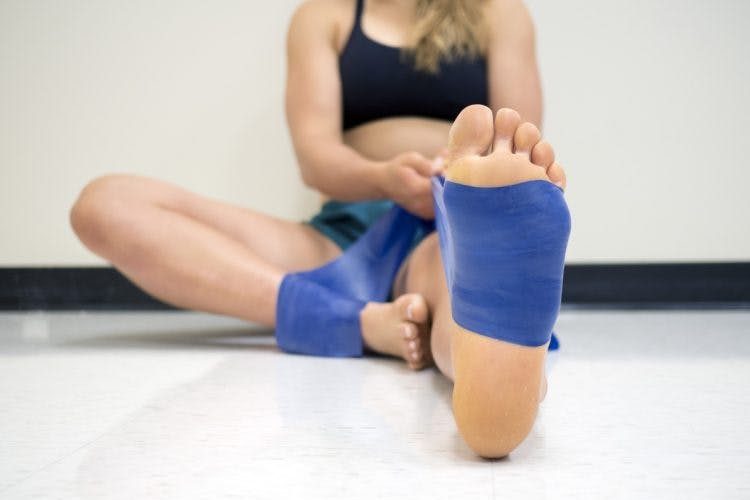
10 Foot Drop Exercises to Get Back on Your Feet with Confidence
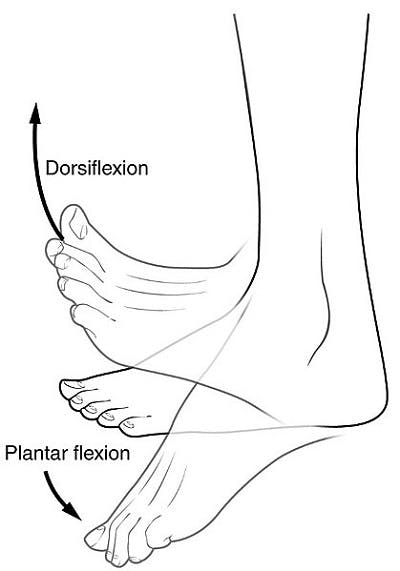
Image credit: Wikipedia
To move your muscles, the brain must send signals that tell your muscles when to contract and relax. When a brain injury or stroke affects the areas of the brain that sends these signals, it can lead to foot drop. However, foot drop can also occur due to damage to the muscles or nerves in the lower leg that directly perform dorsiflexion, or the nerve roots originating from the lumbar spine (specifically L4 and L5).
Foot drop exercises help strengthen the muscles in the area and rewire the brain to improve your brain’s ability to send the correct signals to move your foot. This rewiring process is known as neuroplasticity, and it’s key to foot drop recovery.
Consistent practice of therapeutic exercises and movement retraining provides the brain with the stimulation it needs to relearn the skill of dorsiflexion. Most physical therapists send patients home with a sheet of exercises for foot drop to practice on their own at home to provide the brain with the repetition it needs to recover.
Now that you know why exercises for foot drop are important, let’s start exercising.
Foot Drop Exercises for At-Home Physical Therapy
The following foot drop exercises feature physical therapist Liliana, DPT. She’s the same therapist that guides our leg exercises on YouTube.
Liliana has experience helping patients with foot drop regain mobility using these exact exercises. Here are some of her best physical therapy exercises for foot drop, organized from easiest to hardest:
1. Ankle Dorsiflexion
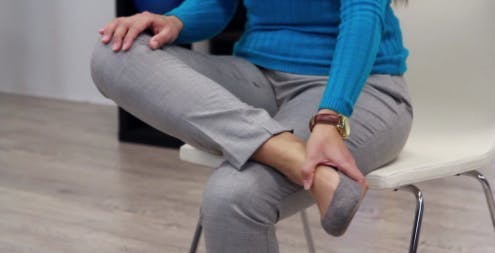

Start this passive foot drop exercise with your affected leg still crossed over your other leg. Then, use your non-affected arm to move your foot into dorsiflexion. This is the exact movement that people with foot drop struggle with, so this exercise is a perfect starting point. If you struggle with getting into this position, or have difficulty reaching your hand to your foot, you can also wrap a towel or belt around your foot to perform the movement.
This is a passive movement, which is a great starting point for anyone struggling with extremely limited mobility. It will also help reduce the chances of your foot and ankle muscles becoming stiff from lack of movement.
2. Ankle Adduction/Abduction

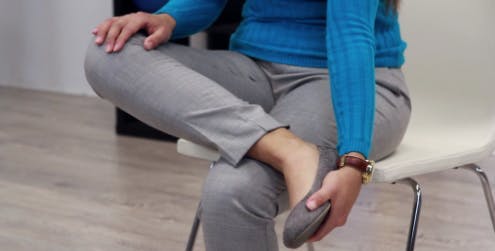
For another great passive foot drop exercise, cross your affected leg over your other leg. Then, use your non-affected hand to move the front part of your foot side to side. Focus on initiating all the movement from your ankle.
Passive exercises for foot drop are great for patients with severely limited mobility. If you already have some movement, then add some challenge by doing the exercise without assistance from your hand (i.e. “active exercise”).
3. Assisted Toe Raises
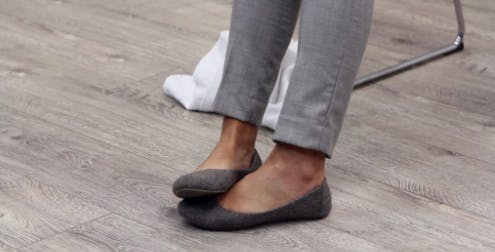
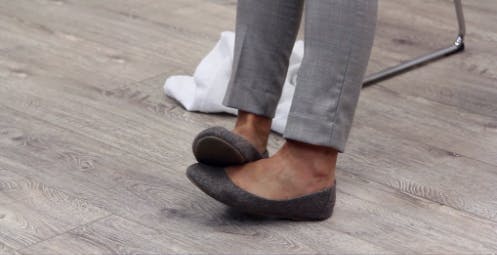
Toe raises are the most difficult movement to perform with foot drop. If you have difficulty with this movement — that’s okay! Fortunately, this is another passive exercise that you can use to help spark neuroplasticity and rewire the brain.
Start by placing your affected foot on top of your non-affected foot. Then, use your non-affected foot to lift your foot up. Use slow, intentional movements to help stimulate the brain. This can be done passively with your foot completely relaxed, or active-assisted as you consciously attempt to dorsiflex with the help of your other foot.
Lift your foot up and down during this exercise a total of 10 times or more.
4. Toe Raise “Negatives”
A “negative” exercise involves emphasizing the eccentric part of a movement. With the previous Toe Raise exercise, the eccentric part of the movement is lowering your foot back down.
During this exercise, we will emphasize only the eccentric part of the movement.
Start by lifting your affected foot up into a flexed position (toes towards your shin), just like in the Toe Raise exercise. But this time, instead of dropping your foot back down quickly, try to lower your foot as slowly as you can.
This move is more advanced, because it does require some control of your foot. Try doing this a total of 10 times before moving onto the next foot drop exercise.
5. Heel Raises
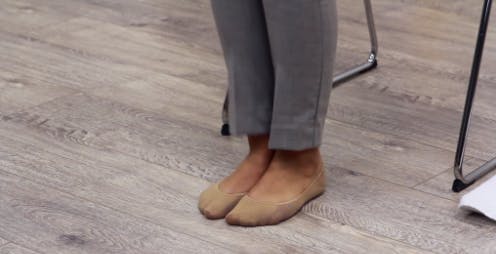
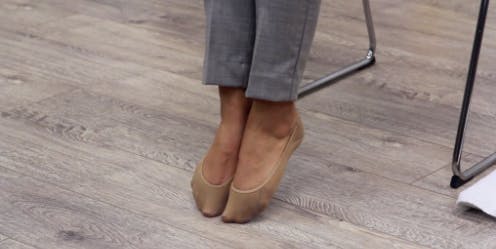
This active foot drop exercise is the opposite of toe raises. Although this may not feel like it’s helping with foot drop, it will help train the surrounding muscles.
To perform heel raises, start with your feet flat on the ground. Then, point your toes and lift your heels off the ground. Try to keep proper neutral foot alignment by pressing actively through your 1st and 2nd toes, making sure not to let your ankles turn outwards during the heel raises. You should feel the muscles in the calf and lower back of the leg working. Repeat 10 times.
6. Ankle Eversion

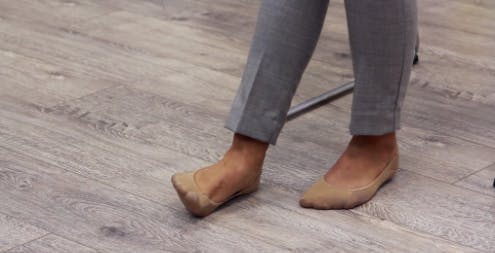
For this active foot drop exercise, place your affected foot flat on the ground. Then, lift the outside edge of your foot and toes up, then relax back down. Focus on isolating the movement from your foot and ankle and try to avoid compensating with your leg. Repeat 10 times.
7. Ankle Inversion
For ankle inversion, start in the same position but move the inside edge of your foot and toes up towards the midline of your body, then relax back down. Repeat 10 times.
8. Single Leg Stance
Standing on one foot is another great exercise for foot drop because it involves ankle eversion and challenges your ankle stability in general. Patients with foot drop who have enough strength and balance can try to stand on their affected leg for 15 seconds at a time. Be sure to hold onto the back of a chair for stability so that you don’t fall. Balance only improves when stability is challenged, so only use as much hand support as needed for safety.
9. Hip External and Internal Rotation
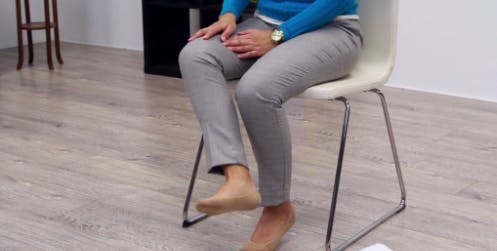
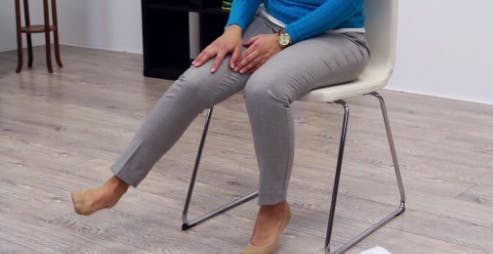
Although this exercise targets the upper leg and hip, it’s also helpful for foot drop because increased tone (stiffness) in the leg can also affect the foot.
Start this lower limb exercise in a seated position. Then, kick your affected leg inward toward your midline (hip external rotation). Then, kick your affected leg outward (hip internal rotation), like you’re kicking a ball to the side. Repeat back and forth.
This exercise helps with foot drop because improving mobility in the leg has a trickle-down effect into the feet.
10. Hip Rotation Slides

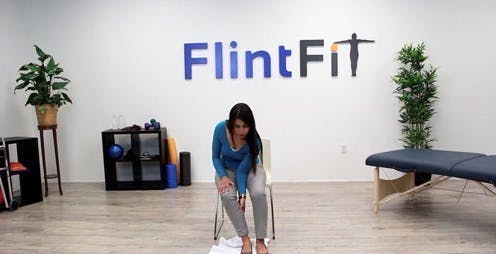
To finish up these foot drop exercises, try this gross motor exercise for the lower limbs.
In a seated position, start with a towel underneath your affected foot. Then, use your arm to assist your affected leg and slide your leg and toes towards your midline (internal rotation). Then, push your leg and slide your leg and toes outwards (external rotation).
You can also perform this exercise by sliding the whole affected leg inward (adduction) to bring the legs closer together, and outward (abduction) to separate the legs.
These last two foot drop exercises target the legs, which can be helpful for patients with severe foot drop when it’s coupled with other lower limb impairments.
Watch More: Foot Drop Exercise Video
If you want more visual guidance, here’s a great YouTube video with foot drop exercises from well-known physical therapists.
Bob & Brad are popular physical therapists on YouTube. While they don’t specialize in stroke rehab like Liliana, their video contains similar exercises for foot drop, like eccentric movements and hip adduction.
Pick and choose the exercises that are most comfortable for you to start with, and work your way up from there. Ideally, it’s best to work with your own therapist to address concerns with foot drop, and continue exercising at home between therapy sessions.
If your insurance covers outpatient therapy, it may be worth it to schedule an appointment with a physical therapist. PT’s understand the complexities of the human body and can provide additional exercises for foot drop, balance, and gait training not covered in this article.
How to Supplement Your Foot Drop Exercises
Foot drop exercises aren’t the only way to recover from foot drop. In fact, recovery often occurs faster when multiple rehabilitation treatments are pursued.
Below, you’ll find the most popular treatments listed from least invasive to most invasive. Talk to your therapist to see which recommendations are suitable for you.
Passive Exercise
Passive exercise is a great foot drop treatment for anyone that has zero mobility in their foot. As seen in the first exercise above, exercising passively involves assisting your foot through the movement. This helps reduce the risk of getting a joint contracture or worsening stiffness, and can improve blood flow and activate neuroplasticity to help recover from foot drop after a neurological injury like stroke.
At-Home Rehab Exercise Equipment
Many patients struggle with practicing foot drop exercises at home. Not because they don’t know what to do (after all, there are a dozen ideas in this article alone), but because they don’t have the motivation or accountability.
This issue is solved with high-tech rehab exercise equipment like Flint Rehab’s FitMi home therapy. The device turns that written sheet of exercises into an interactive experience that helps motivate you to exercise. See how a stroke patient named Ron regained foot mobility with FitMi:

“With the FitMi, I have immediate feedback and also weekly feedback on how well I am doing. I am having great fun with this product. I have noticed real-world results as well. I drive one-footed now rather than two-footed because I can target the gas pedal and the brake with my right foot. I can target the cruise control set button with my right hand. These accomplishments are due to the exercises and feedback of the FitMi.”
-Ronald
Electrical Stimulation
Aside from foot drop exercises, electrical stimulation is one of the best complimentary treatments for mobility issues after stroke. Electrical stimulation involves applying electrical currents through the skin to the nerves and muscles. It has been shown to help improve foot drop and gait in stroke patients.
Many studies show that combining electrical stimulation with rehab exercise leads to even better results. It is important to recognize that the research is specifically looking at the effects of neuromuscular electrical stimulation (NMES) or functional electrical stimulation (FES) using specific parameters to help facilitate motor recovery. This differs greatly from transcutaneous electrical nerve stimulation (TENS) which is primarily for pain control.
Work with a physical therapist to learn what electrical stimulation device is most appropriate, how to adjust the settings, and where to place the electrodes. Depending on which muscles or nerves are affected in the foot and leg, they will adjust accordingly.
Ankle Foot Orthotics
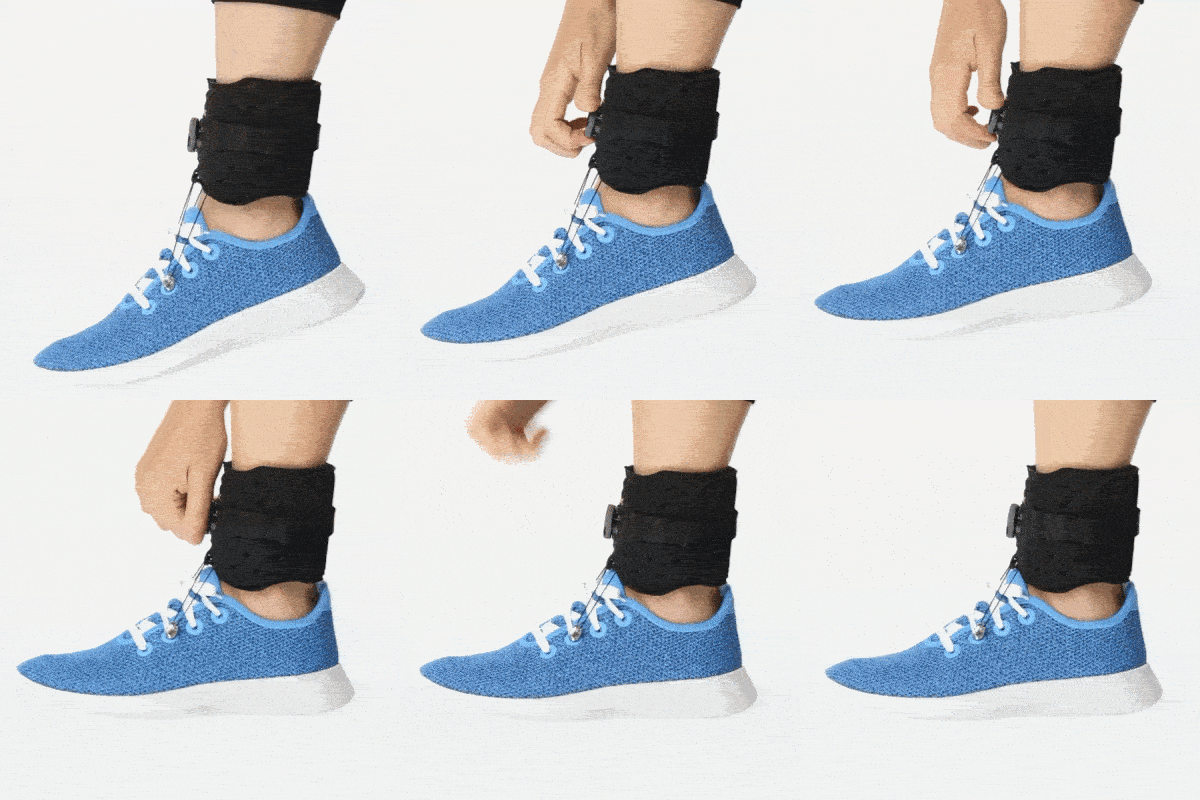
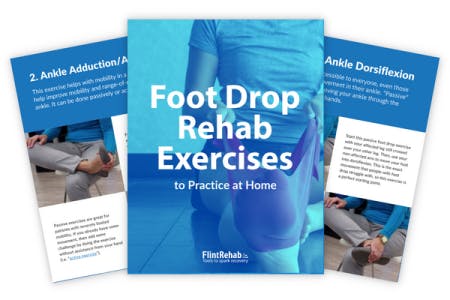
Get our free ebook filled with 14 pages of foot drop exercises featuring photos of licensed therapists. Sign up below to get your copy! We never sell your email address, and we never spam. That we promise.