Blog
BLOG
How Fun Activities Help Stroke Rehabilitation
There are a number of ties between physical activity and reduced risk for stroke. Studies have shown that individuals who remain physically active as they get older are between 25 and 30 percent less likely to experience a stroke. Physical activity also plays a huge role in the lives of individuals who do end up experiencing one as it helps in the recovery process. Exercise after a stroke is a vital factor in regaining function, so finding and participating in exercises that are fun, rather than tedious or boring, can make a big difference during rehab and recovery. It can be difficult to...
Understanding Your Stroke Risk
The more stroke risk factors you have, the more likely you are to suffer a stroke. Some risk factors are genetic, so they are out of your control; however, you can do something about others, like your diet and exercise. Because up to 80 percent of strokes are preventable, it is important to be aware of your risk factors, especially the ones you can control. Lifestyle Based Risk Factors Unhealthy Diet Diets high in trans fats and cholesterol have been linked to stroke and heart disease. According to the National Stroke Association, you should avoid consuming more than 10 percent of your daily calorie...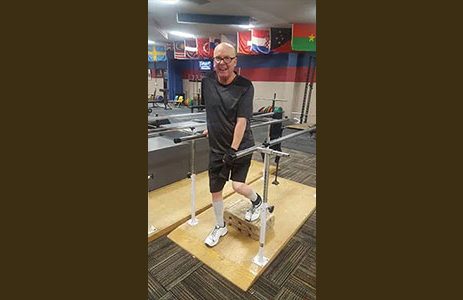
The SaeboStep is far superior to the other ankle-foot orthosis I was using… I am so grateful.
On Mother’s Day, 2014, I got my cup of coffee, sat down to breakfast with my wife’s gift in hand, and had a stroke. After the stroke, I spent seven weeks in a rehabilitation hospital. One week after I was released I fell and broke my humerus bone. After that, I continued to try and do stupid things on my own and soon slipped and fractured my hip (don’t try to do stupid things on your own!). So now I have a rebuilt hip, in addition to a weak left side and no use of my left arm. Walking is...
Thank you Saebo. I love your motto: “No Plateau in Sight.”
I was 15 years old when I experienced a stroke on July 24th, 1975. Relearning how to do simple things or things I had taken for granted was hard. I learned how to ride a bike again, at age 16, by strapping my right foot into the pedal and moving everything I needed to operate the bike over to the left side of the handlebar. After many attempts and many bruises, riding my bike is now a great pastime. My way of dealing with what happened to me has been to overcompensate with the left side of my body; I...