


Different Types of Cerebral Palsy: Spastic, Dyskinetic, Ataxic, and MixedSpastic Hemiplegia: When Cerebral Palsy Only Affects One Side of the Body
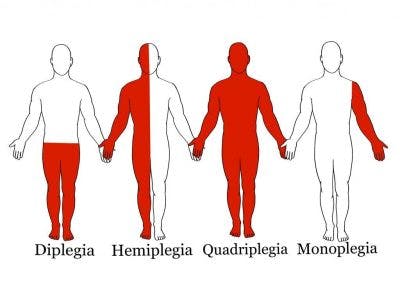
Spastic cerebral palsy is the most common type of cerebral palsy. In fact, it makes up about 80% of all cerebral palsy cases.
Spastic CP is caused by damage to the motor cortex, the part of the brain responsible for controlling and planning voluntary movements. This type of cerebral palsy is primarily characterized by high muscle tone, otherwise referred to as spasticity. Because constantly tight muscles make it difficult to move, individuals with spasticity typically exhibit stiff or exaggerated movements.
Another unique characteristic of this type of cerebral palsy is that it can affect specific areas of the body. All other types of CP generally affect the entire body. As a result, spastic CP can be further differentiated by which areas of the body are affected.
The different subcategories of spastic cerebral palsy include:
- Spastic diplegia describes motor impairments that predominantly affect the legs. While individuals with this type of CP may experience mild motor impairments in the arms, the impairments are most severe in the legs.
- Spastic hemiplegia refers to motor impairments on one side (left or right) of the body. Either the left or right portion of the brain’s motor cortex is damaged in this type of cerebral palsy, leading to motor impairments on the opposite side of the body. Individuals with this type of spastic CP generally experience more severe motor impairments in the affected upper body than the affected lower body.
- Spastic quadriplegia affects the entire body. This can include the facial muscles, which may complicate functions like chewing, swallowing, and speaking. Generally, spastic quadriplegia is associated with the most severe brain damage.
- Spastic monoplegia occurs when a single limb (usually an arm rather than a leg) is affected.
- Spastic triplegia describes when 3 limbs are affected, generally two legs and one arm.
2. Dyskinetic Cerebral Palsy
Dyskinetic cerebral palsy occurs in up to 15% of all cerebral palsy cases, making it the second most diagnosed type of cerebral palsy.
It’s caused by damage to the basal ganglia and/or thalamus. These regions of the brain play a role in controlling voluntary movements and inhibiting unwanted movements. When dyskinetic cerebral palsy occurs due to damage to one or both of these regions of the brain, individuals primarily experience uncontrollable movements.
There are two main types of disordered movement patterns people with dyskinetic cerebral palsy may experience: choreoathetosis and dystonia. Choreoathetosis is characterized by uncontrollable fluctuations in muscle tone and rapid, jerky movements. In contrast, dystonia is characterized by muscle contractions that cause repetitive, twisting movements. Both choreoathetosis and dystonia tend to worsen when an individual is emotional or stressed.
Learn more about dyskinetic cerebral palsy »
3. Ataxic Cerebral Palsy
Ataxic cerebral palsy makes up about 5-10% of CP cases, making it the least common type of cerebral palsy. It is caused by damage to the cerebellum, which is the region of the brain responsible for regulating balance and coordination.
As a result, individuals with ataxic cerebral palsy may demonstrate:
- Frequent falls
- A wide-based gait (walking with the legs spread apart for extra stability)
- Speech difficulties
- Intention tremors
- Trunk instability
- Difficulty performing tasks that require precision (i.e., writing)
- Low muscle tone (hypotonia)
Low muscle tone can make it challenging for individuals to control their movements. Consequently, the body must expend more energy to move or to maintain an unsupported posture. As a result, individuals with ataxic cerebral palsy may tire easily and have low activity tolerance.
4. Mixed Cerebral Palsy
The final type of cerebral palsy is called mixed cerebral palsy. Mixed cerebral palsy is caused by damage to multiple areas of the brain. As a result, individuals experience symptoms of two or more different types of cerebral palsy.
The most common type of mixed cerebral palsy is spastic-dyskinetic. Individuals may exhibit characteristics of spastic CP, such as stiff movements, and characteristics of dyskinetic CP, such as uncontrollable movements that worsen when emotional or stressed.
Learn more about mixed cerebral palsy »
Now that you understand the main distinctions between the 4 different types of cerebral palsy, the following section will discuss treatment goals.
Treatment for Different Types of Cerebral Palsy

Regardless of the type of cerebral palsy a person has, no two individuals experience the effects of CP exactly alike. Therefore, a personalized approach to treatment that targets each individual’s specific weaknesses is essential.
Many children see a wide variety of medical professionals from diverse specialties like physical therapy, occupational therapy, pediatrics, orthopedics, behavior therapy, and speech-language pathology to manage their CP.
Because cerebral palsy affects movement, most individuals will benefit from physical therapy. There, they will work on strengthening underused muscles, lengthening spastic muscles, correcting abnormal walking patterns, and improving overall movement and posture.
The goal of physical therapy is to focus on promoting the brain’s natural healing mechanism, neuroplasticity. Neuroplasticity enables the brain to rewire its neural circuitry. Therefore, functions affected by damage to the brain have the potential to be rewired to healthy, undamaged regions of the brain and improved.
The most effective way to promote neuroplasticity is to repetitively practice the specific skills you wish to improve. Consistent and task-specific repetition reinforces demand for those skills, which encourages the brain to adapt.
Early intervention and treatment tend to be the most effective, as poor habits have had limited time to form and the brain is able to change and adapt at a more rapid pace. However, the brain always has the ability to adapt, so improvements are possible at any age.
Different Types of Cerebral Palsy: Key Points
There are 4 primary types of cerebral palsy: spastic, dyskinetic, ataxic, and mixed. They are primarily differentiated by which regions of the brain have been damaged.
Depending on the severity and location of that damage, individuals can experience a wide range of secondary effects. As a result, everyone experiences cerebral palsy differently and will require personalized treatment.
While cerebral palsy is a lifelong condition, there is hope for improvements! By engaging neuroplasticity through repetitive, task-specific movement, individuals can potentially rewire functions affected by brain damage to healthy regions of the brain.
We hope this article helped you understand the distinctions between the various types of cerebral palsy and how to promote long-term improvements.
Keep it going: Don’t leave behind this free ebook with 19 pages of helpful tips for cerebral palsy

Get our free 19-page PDF full of helpful tips for cerebral palsy by signing up below! If you liked this article, you’ll LOVE our free ebook.
When you sign up, you’ll also receive our popular emails that share more tips for life with cerebral palsy — you can opt out anytime.
We will never sell your email address, and we never spam. That we promise.