

Magnetic Therapy for Stroke Patients: What Does the Science Say?
shop-mgr2023-01-18T18:13:51+08:00Magnetic therapy for stroke patients can improve paralysis associated after stroke, according to new research. It does this by triggering the brain’s natural healing mechanism: neuroplasticity.
To help you decide whether this experimental treatment is right for you, this article will explain the benefits of magnetic therapy and how it may help with stroke recovery.
What is Magnetic Therapy?
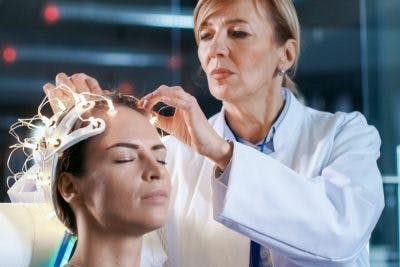
Magnetic therapy, also known as repetitive transcranial magnetic stimulation (rTMS) is a non-invasive treatment in which doctors place magnetic coils on the patient’s scalp. From these coils, short electromagnetic pulses are delivered to specific brain areas. Although these pulses are nearly impossible to detect, they reach deep into the brain to send electrical currents that stimulate neurons.
Currently, it is FDA-approved to treat compulsive disorder and depression. More recently, scientists have found success using it to treat common secondary effects of stroke. More specifically, researchers have found that it can improve arm movement and walking speed.
These benefits may affect people who may struggle with the activities of daily living, such as getting dressed or walking to the bathroom, after stroke.
We will discuss these benefits further below. Before we get there, it helps to understand how magnetic therapy for stroke patients works.
How Magnetic Therapy for Stroke Works
When the neurons in the brain are stimulated, they engage a natural phenomenon known as neuroplasticity. Neuroplasticity allows the brain to rewire itself and reassign damaged functions to other areas that were unaffected by injury.
Therefore, by stimulating specific brain regions, magnetic therapy can potentially offer multiple benefits to patients after stroke. However, magnetic stimulation does not only target the injured side of the brain. It also targets the non-injured side.
The reason behind this has to do with how the brain controls movement. Each side of the brain controls the opposite side of the body. This explains why a right-side stroke affects the left side of the body and vice versa.
However, all movement requires cooperation from both sides of the brain. For example, to move your left hand, the right side of the brain must send an excitatory signal, and the left must send an inhibitory one. This ensures that movement remains balanced.
Unfortunately, after a stroke, the brain loses this balance and can no longer send the correct signals. By stimulating both sides of the brain, magnetic therapy restores that balance.
Benefits of Transcranial Magnetic Stimulation
While repetitive transcranial stimulation can treat many secondary symptoms after stroke, it seems to have the most effective results on movement problems. For example, research shows that magnetic therapy helps stroke survivors improve their gait and walk independently again.
In another study, researchers applied magnetic stimulation to patients with severe arm paralysis. During the experiment, the researchers asked the patients to try to reach for an object when they saw the “Go” signal. When the patients tried to move, the doctors would apply magnetic stimulation to the area in the brain that produces that movement.
The results showed that the therapy had a profound effect on those with severe motor impairments.
Magnetic therapy can also treat some cognitive effects of stroke. Most notably, only ten minutes of magnetic stimulation resulted in significant improvements in naming skills in non-fluent aphasia patients.
As you can see, magnetic therapy can offer many important benefits to stroke survivors, and its non-invasive nature makes it especially ideal. With that said, it is not a cure for stroke, and it will require work on your end to produce the most results.
How to Get the Most from Magnetic Stimulation
Although magnetic brain stimulation for stroke patients can improve movement after stroke, your brain still needs extra help to recover. Dr. Marcie Bockbrader, assistant professor of Physical Medicine and Rehabilitation at Ohio State, put it like this:
“What we’re doing is allowing the brain to be ready and more receptive for therapies,” said Bockbrader. “It’s not a technology that’s limited to just motor recovery after stroke, it seems to be something that has a potential to affect many of the brain circuits that are injured in stroke.”
Therefore, magnetic stimulation essentially primes the brain for further therapy. But you still must pair it with stroke rehab exercises to see the best results.
Since the brain builds skills through repetition, the most effective therapy incorporates heavy repetition. Home exercise devices like Flint Rehab’s FitMi are designed specifically for that purpose.
How to Access Magnetic Therapy for Stroke

If you want to participate in magnetic therapy for stroke recovery, try searching for clinical trials in your area. Insurance does not typically cover magnetic stimulation, so this can be a more affordable option.
You can also search online to see if any local clinics or hospitals offer rTMS for stroke recovery. However, you should exercise caution when choosing a program.
Because rTMS for stroke is still experimental, most magnetic stimulation treatments available are reserved for people with depression. Make sure that you search specifically for stroke recovery, and make sure the clinic also encourages physical therapy in tandem. This will help assure that you get the most benefits possible.
Facts About Magnetic Stimulation
Magnetic therapy can be an excellent option for patients after stroke, especially for those who have hit a plateau in their recovery. The magnetic stimulation can potentially give your brain a significant boost in plasticity, allowing you to continue making progress.
However, as with all stroke treatments, you must be willing to work for the gains. While magnetic therapy can be a helpful tool, you will not regain function unless you continue with your therapy.
We hope this article helps you better understand the benefits of magnetic therapy for stroke patients.
Keep It Going: Download Our Stroke Recovery Ebook for Free

Get our free stroke recovery ebook by signing up below! It contains 15 tips every stroke survivor and caregiver must know. You’ll also receive our weekly Monday newsletter that contains 5 articles on stroke recovery. We will never sell your email address, and we never spam. That we promise.