


What to Do After a Stroke: 13 Tips Every Patient Must Know

Understanding the warning signs of a stroke is a step in the right direction, but taking action towards prevention is the foundation of recovery and encourages you to live your best life. Some stroke risk factors are uncontrollable, like heredity or age. Luckily, many stroke risk factors are manageable.
For example, high blood pressure and atherosclerosis (hardening of the arteries) can be improved with a healthy diet. This is why dietitians are an integral part of your rehabilitation team.
3. Therapy, therapy, therapy!
Often, there is spontaneous recovery during the first 3 months after stroke or even later during the recovery process. This means that the brain is naturally healing itself, and can be increased with attention/awareness of the affected side and exercises provided by your therapy team.
Therefore, it’s important to take advantage of this “recovery window” by actively participating in your physical, occupational, and speech therapy recovery program.
4. Ask the medical team where you’ll go after the hospital
After the discharge from the hospital, patients transfer to one of 3 possible places: a skilled nursing facility, inpatient rehab facility, or home, based on their current level of function.
In order to qualify for inpatient rehabilitation, a patient must be able to participate in at least 3 hours of therapy a day. Otherwise, they transfer to a skilled nursing facility to gain the strength required to tolerate additional hours of therapy.
5. Inpatient rehabilitation
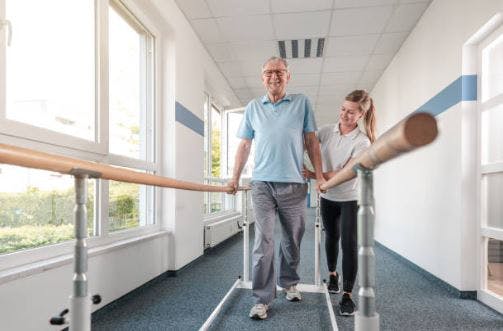
The quality of inpatient therapy is unparalleled to other options. Researchers conclude that the efficacy and intensity of inpatient therapy is one of the reasons stroke patients may recovery more during the first 3 months.
If you or your loved one can actively participate in inpatient therapy, do your best to request the option. It will send a message that you want to take charge of your healing process. It could make a difference in recovery and quality of life later on.
6. Anticipate a journey that looks different from others
“Every stroke is different.” You’ll hear this saying often during the recovery process because the brain is extremely complex; and the side effects of stroke vary greatly from person to person.
It is critical to work closely with your team of experts from the first day of recovery. They can help you understand your unique side effects and tailor your recovery plan accordingly.
7. Modify the home to help prevent falls
Another important thing to do after stroke is ask a physical or occupational therapist to complete a home evaluation. They can provide expert home modification recommendations to ensure your health and safety.
Your therapist may recommend some extra safety precautions like installing grab bars and handrails, adding non-slip mats to the shower, and suggesting helpful core and balance exercises to enhance your safety and prevent falls.
8. Keep up with your rehab exercises

One of the most important things to do after stroke — and never stop doing until you’re reached your fullest recovery — is rehab exercise.
Rehab exercise helps rewire the brain and improve mobility long-term. When patients fail to do rehab exercises, their mobility may deteriorate and cause a regression. To avoid backsliding, keep up with rehab on a consistent basis.
See a list of 12 rehab exercises you can do at home »
9. Explore home therapy options after discharge
After discharge from inpatient therapy, therapists usually send patients home with a written sheet of exercises to do on their own. These sheets of exercises have low compliance rates, which means that patients are not getting adequate therapy at home.
This is where home therapy tools can help fill in the gap. Devices like Flint Rehab’s FitMi home therapy can help motivate patients to participate in daily rehab. As a result, many patients see improvement within weeks of using the device.
See reviews for FitMi home therapy »
10. Invest in psychological care
Another type of therapy that often goes overlooked is psychotherapy, or “talk therapy.” Many stroke survivors struggle with depression and anxiety — for various reasons that can include changes in independence, financial strain, or fear of another stroke.
Depression or anxiety can decrease your ability to motivate yourself for recovery, which also decreases your energy during rehabilitation. Psychological care is important for a holistic approach to stroke recovery.
11. Join a support group (for survivors and caregivers)

Support groups provide fellowship with other stroke survivors who understands exactly what you’re going through. A support group can offer suggestions, resources, social opportunities and friendship. Support groups are available through the ASA’s support group finder. If you can’t find any in your area, you can also join an online group.
12. Experiment with different therapies
Because every stroke is different, there is no one-size-fits-all approach to rehabilitation. Therefore, you should research various stroke rehabilitation techniques to find the one that works best for you.
13. Prepare for the long haul
As we stated earlier in the article, each stroke is different, therefore each person will recover at a different pace and degree of recovery. Studies show that the level of recovery is based on multiple factors: age, general health, amount of support from others, belief of recovery and the energy and time you spend on your exercise program.
Now that you know what to do after a stroke, start taking action. These best practices can help you take all the right steps to ensure the highest recovery possible for you or your loved one. Best of luck on the road to recovery.
Keep It Going: Download Our Stroke Recovery Ebook for Free

Get our free stroke recovery ebook by signing up below! It contains 15 tips every stroke survivor and caregiver must know. You’ll also receive our weekly Monday newsletter that contains 5 articles on stroke recovery. We will never sell your email address, and we never spam. That we promise.