

Zao Rehab
  • Home
  • Brands
    • Flint Rehab
    • Foot Scientific
    • Saebo
    • Innovaid
    • Neuroelectrics
    • Microbecare
  • Resources
    • Flint Rehab
    • Foot Scientific
    • Saebo
    • Innovaid
    • Neuroelectrics
    • Microbecare
  • Shop
  • Contact
Search
Zao Rehab

CALL US NOW

  • (65) 69376833
  • or
  • (65) 86067510
flint-rehab-logo
START HERE
  • FITMI
    • FitMi for Home
    • Clinic FitMi
  • MUSICGLOVE
    • MusicGlove for Home
    • Clinic MusicGlove
AFO BUNDLES
  • BLOG
    • Stroke Blog
    • TBI Blog
    • SCI Blog
    • CP Blog
    • Free Ebook
  • ABOUT
    • About
    • Support
  • Start here
  • FitMi
    • FitMi for Home
    • Clinic FitMi
  • MusicGlove
    • MusicGlove for Home
    • Clinic MusicGlove
  • AFO
  • Bundles
  • Blog
    • Stroke Blog
    • TBI Blog
    • SCI Blog
    • CP Blog
    • Free Ebook
  • About
    • About
    • Support

Surgery for Hemorrhagic Stroke vs. Ischemic Stroke: What Will Doctors Choose?
shop-mgr2023-06-06T11:28:42+08:00

Sometimes doctors need to perform surgery to treat a hemorrhagic or ischemic stroke.

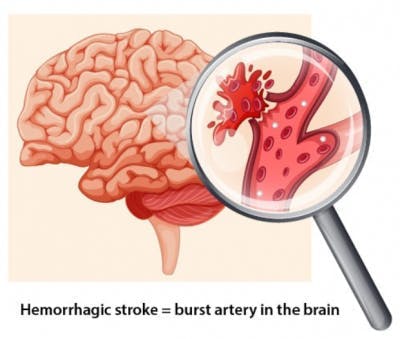
Hemorrhagic stroke is caused by a burst artery in the brain. Ischemic stroke is caused by a blood clot. Both types of stroke are very different, and they are treated differently, too.

You’re about to learn which surgeries doctors might choose to treat each type of stroke.

Surgery for Hemorrhagic Stroke: Types and Timeline

Hemorrhagic stroke occurs when an artery in the brain bursts. This causes bleeding into the brain tissue (intracerebral hemorrhage), which is an extreme medical emergency. Swift treatment is required to limit brain damage and save a life.

Treatment for hemorrhagic stroke focuses on 3 goals: stopping the bleeding, draining the hematoma (collection of blood outside the blood vessels), and relieving any intracranial pressure (pressure within the skull).

Depending upon the stroke severity and patient’s condition, surgery can be performed within the first 48 to 72 hours. But sometimes doctors must wait longer if conditions need to stabilize.

Here are the types of surgery used for hemorrhagic stroke:

  • Craniotomy with open surgery. If the hematoma is large, the neurosurgeon will remove part of the skull to drain the hematoma. If the brain is swollen, this operation allows the brain to bulge past the limits of the skull and reduce intracranial pressure. Then, doctors can directly operate on the brain (open surgery) to repair the blood vessel.
  • Simple aspiration. When the hematoma doesn’t require a craniotomy, surgeons may opt for a simple aspiration. During this surgery, a small hole is drilled into the skull to drain the hematoma. The good: it’s less invasive. The bad: it can be difficult to effectively drain the blood.
  • Endoscopic evacuation. This is another minimally invasive surgery used to treat hemorrhagic stroke. During this operation, a small hole is drilled into the skull and a tiny camera (endoscope) is used to help the neurosurgeon reach and drain the hematoma.
  • Stereotactic aspiration. A CT scan is used to locate the hematoma before a small hole is drilled into the skull and a special suction tool is used to drain it. This is also less invasive than open surgery.
  • Ventriculostomy. When there is bleeding in the ventricles of the brain, a neurosurgeon may perform a ventriculostomy. During this surgery, a small hole is made in the skull where a catheter is inserted. Then, it’s used to drain the blood and relieve intracranial pressure.

Sometimes a craniotomy is required after an ischemic stroke if there is excessive swelling in the brain – but it’s mostly used to treat hemorrhagic strokes.

If surgery for hemorrhagic stroke must be performed, the decision must be made rapidly. Intracranial pressure can lead to brain damage and even death.

Next we will discuss treatment for ischemic stroke.

Ischemic Stroke Surgery: Mechanical Embolectomy

An ischemic stroke occurs when a blood clot clogs an artery in the brain, restricting blood flow to the affected area. All strokes, including ischemic stroke, are a medical emergency. Time lost is brain lost.

Ischemic strokes are most often treated with clot-busting drugs like tPA or aspirin. Once administered, these drugs help dissolve the clot. When drugs do not work, or cannot be administered, doctors may resort to surgery.

The surgery most frequently used to treat an ischemic stroke, when drugs fail or cannot be used, is a mechanical embolectomy.

During this type of surgery, the blood clot in the brain is removed using a stent (a tiny wire mesh tube that helps prop an artery open).

The stent is inserted into an artery through a catheter starting in the leg, making it much less invasive than brain surgery. When the catheter is removed, the stent and the clot are removed along with it.

Here’s a video that shows how a mechanical embolectomy works:

Surgery for Stroke: Assessing Your Options

Surgery is a key procedure to restore normal blood flow in the brain after a stroke. While it’s not always required, it can save a life.

If the stroke is caused by a burst artery (hemorrhagic stroke) neurosurgeons may perform a craniotomy to open up the skull and relieve intracranial pressure.

When the stroke is caused by a blood clot (ischemic stroke) and cannot be treated with drugs, surgery may be used to help remove the clot.

Each type of surgery comes with its own risks and rewards, and it’s best to discuss your unique circumstances with your doctor or medical team.

However, because stroke is a medical emergency, some decisions are made in high pressure situations where there’s no time to discuss the pros and cons.

When stroke happens, you often have to trust that your medical team will make the best possible decision for you or your loved one.

Keep It Going: Download Our Stroke Recovery Ebook for Free

Get our free stroke recovery ebook by signing up below! It contains 15 tips every stroke survivor and caregiver must know. You’ll also receive our weekly Monday newsletter that contains 5 articles on stroke recovery. We will never sell your email address, and we never spam. That we promise.

I want this!

Share this post

Facebook Twitter LinkedIn Google + Email

Recent Posts

Types of Spinal Cord Injury: Complete vs Incomplete, Levels, & ASIA Scale
T6 Spinal Cord Injury: 7 Major Secondary Effects
What to Expect After a T4 Spinal Cord Injury: Is Recovery Possible?
Mild Cerebral Palsy: How to Identify the Signs & Why Early Intervention Matters
Severe Cerebral Palsy: What to Expect and How to Manage
Understanding Ataxic Cerebral Palsy: How to Spot the Symptoms & Treatment Methods

Zao Inc Pte Ltd

37, Jln Pemimpin, #06-02 Mapex, Singapore 577177

contactus@zaoinc.com

(65) 69376833

(65) 86067510

Zao Malaysia Sdn Bhd

B-01-11, Gateway Kiaramas Corporate Suites No 1, Jalan Desa Kiara, Mont Kiara 50480, Kuala Lumpur, Malaysia

contactus@zaoinc.com

(60) 1168688828

(60) 108946135

Follow Us

Zao International (HK) Limited

Flat/RM A, 3/F, Cheong Sun Tower, 116-118 Wing Lok Street, Sheung Wan, Hong Kong

contactus@zaoinc.com

(852) 91880612

Brands

  • FlintRehab
  • FootScientific
  • Saebo
  • Innovaid
  • Neuroelectrics
  • Microbecare

© 2024 Zao Inc Pte Ltd. All Rights Reserved.

  • Home
  • Brands
    • Flint Rehab
    • Foot Scientific
    • Saebo
    • Innovaid
    • Neuroelectrics
    • Microbecare
  • Resources
    • Flint Rehab
    • Foot Scientific
    • Saebo
    • Innovaid
    • Neuroelectrics
    • Microbecare
  • Shop
  • Contact