


Shoulder Subluxation After Stroke: Treatment and Rehabilitation Exercises
Shoulder subluxation after stroke occurs when the arm becomes partially dislocated from the shoulder socket due to muscle weakness or paralysis. While this secondary effect of a stroke can be painful and limiting, recovery is often possible through the right rehabilitation regimen.
To help you relieve pain and improve mobility, this article will discuss the causes and treatments for shoulder subluxation after stroke. You’ll also learn why shoulder subluxation exercises are the key to recovery.
Causes of Shoulder Subluxation After Stroke
The shoulder is a ball-and-socket joint and is the most mobile joint in the body, making it particularly susceptible to problems and injury. Shoulder subluxation happens when the upper arm bone, called the humerus, becomes partially dislocated from the shoulder socket.
Following a stroke, areas of the brain responsible for movement, such as the primary motor cortex, can be damaged. This can cause hemiparesis (weakness on one side of the body) or hemiplegia (paralysis of one side of the body).
When the muscles around the shoulder, called the rotator cuff, become weak or paralyzed after stroke, gravity pulling down on the arm can cause the humerus to “drop” lower in the socket because the muscles cannot hold it in place.
Shoulder subluxation can be painful and, if left untreated, the condition could worsen. If you have shoulder subluxation, it’s critical to see a therapist for an accurate diagnosis and treatment plan.
Below you will find methods commonly used to treat shoulder subluxation after stroke and prevent this condition from worsening.
How to Treat Shoulder Subluxation after Stroke
Classic treatments for shoulder subluxation include surgery, shoulder slings, closed reduction (manipulating the shoulder back into position), and medication.
However, when shoulder subluxation is caused by a stroke, the primary treatment will involve rehabilitative exercise. Shoulder braces and medication may also be used to ease subluxation symptoms and/or pain while rehabilitation is in progress.
For shoulder subluxation after stroke, doctors and therapists prefer rehabilitation over surgery because it addresses the root cause of the problem: miscommunication from the brain.
Movement is controlled by the brain as nerves carry messages from the brain to the muscles to initiate muscle contraction. Therefore, mobility issues like shoulder subluxation after stroke are best treated by retraining the brain to effectively communicate with the affected muscles.
This is possible thanks to neuroplasticity, the mechanism the brain uses to rewire itself and create new neural pathways. Neuroplasticity is activated by “massed practice,” or high repetition of a specific task. The more an exercise is practiced, the stronger the neural connection or “blueprint” for this motion will become.
Therefore, to improve shoulder subluxation after stroke, individuals can practice safe shoulder rehab exercises to retrain the brain and body to move correctly. With time and consistent adherence to a rehabilitation regimen, the arm bone, or humerus, will be encouraged to stay in the socket while also improving your overall shoulder mobility and function.
Rehabilitation Exercises for Shoulder Subluxation
Because shoulder subluxation is a serious issue, it’s very important to consult with your therapist before beginning any exercises to make sure they’re safe and optimal for you. Your therapist will be able to identify the most appropriate exercises for you in order to address shoulder mobility, strengthening, and functional activities of daily living.
The goal of rehab exercise is to practice proper movement and mechanics to encourage recovery of neural connections and improve overall shoulder strength. Rehab exercises should be performed with high repetition to stimulate the brain and encourage the rewiring process.
Here are some examples of shoulder subluxation exercises that your therapist may recommend:
Tabletop Punching Movement
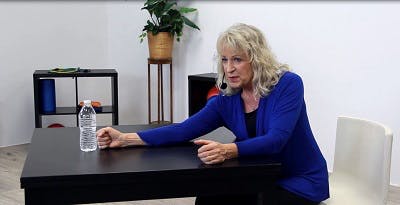

Place your forearm on a table pointing straight ahead at 12 o’clock. Then, place a water bottle right in front of your hand.
Make a fist, and then gently “punch” the water bottle forward by gliding your forearm forward across the table. Be sure to do this gently and slowly. Then move back to starting position. Try to focus on pushing the water bottle away with your arm and shoulder, not by bending forward at your hips.
Use your non-affected side to bring the water bottle back towards you, and repeat 10 times. Stop this exercise immediately if it creates pain.
Shoulder Pushing Movement

Place your forearm on the table with your arm pointing at 12 o’clock, and place the water bottle near the outside of your wrist.
Then, push the water bottle laterally away from your body by gliding your forearm across the table while keeping your upper arm glued to your side, similar to the movement of a windshield wiper. Stop the exercise here, then return to the starting position and complete 10 repetitions.
Stop this exercise immediately if it creates pain.
Complimentary Treatments for Shoulder Subluxation
Rehabilitation exercise is the bread and butter of treatment for shoulder subluxation after stroke. There are a few other treatments that can be combined with rehab exercises for even better results, too.
Here are a few more rehabilitation methods that you can explore with your therapist to help treat shoulder subluxation after stroke:
Kinesio Taping
Kinesio taping is a technique that may be effective to retrain the brain and muscles to reduce shoulder subluxation. It involves placing gently stretched pieces of kinesio tape on your upper arm and shoulder to stimulate the muscles and encourage proper positioning of the shoulder joint.
The tape will provide a light, supportive pull to stimulate the brain and encourage the humerus back into the shoulder joint. This may help to reduce pain and can also help maintain proper shoulder positioning during rehabilitative exercises. Ask your therapist which kinesio taping method may be appropriate for you.
Interactive Home Therapy Devices
As you work with your therapist to address shoulder subluxation, it’s important to keep practicing your rehab exercises at home. The brain needs consistent stimulation to rewire itself, and therapy once per week isn’t enough.
To help keep yourself accountable at home, you can invest in home therapy devices that target your upper extremities. The FitMi from Flint Rehab, for example, transforms classic rehab exercises into an interactive game — which motivates you to accomplish the high repetitions necessary to rewire the brain. Your therapist can take a look at the exercises included to make sure they’re safe for you to perform independently.
Electrical Stimulation
If your arm is paralyzed after stroke, it’s important to work even more closely with a therapist to find the right exercises and management techniques. Your therapist may recommend electrical stimulation in addition to your exercises because this is a great way to introduce movement to paralyzed muscles.
Your brain communicates with your muscles using electrical impulses, and electrical stimulation helps facilitate this process. This stroke recovery technique helps “wake up” the muscles around your shoulder and, in time, your arm may go back into (or stay in) its socket. You should consult your therapist to learn where to place the electrodes and find the best settings for you.
Also, even if your arm is not paralyzed, electrical stimulation can still be a beneficial addition to your rehabilitation regimen. Studies have shown that combining electrical stimulation with rehabilitative exercise leads to better results than rehab exercise alone.
Getting Your Shoulder Back on Track
Shoulder subluxation occurs when the arm muscles are severely weakened or paralyzed after stroke, causing gravity to pull the humerus partially out of the shoulder socket. Fortunately, the brain can regain the ability to control the arm muscles through the phenomenon of neuroplasticity and the right rehabilitation regimen. With enough time and consistent practice, your humerus may slowly return to its original position. Be sure to work closely with a therapist and follow any instructions they give you to continue recovering at home.
Keep It Going: Download Our Stroke Recovery Ebook for Free

Get our free stroke recovery ebook by signing up below! It contains 15 tips every stroke survivor and caregiver must know. You’ll also receive our weekly Monday newsletter that contains 5 articles on stroke recovery. We will never sell your email address, and we never spam. That we promise.