


Shoulder Pain After Stroke: Causes & Treatment Methods
Shoulder pain after stroke can stem from a variety causes — and each responds to different treatment techniques.
If you’re struggling with shoulder pain, it’s important to work with a therapist for an accurate diagnosis and treatment.
This article will discuss everything you should know about relieving shoulder pain after stroke. We’ll start with the causes and then move onto rehabilitation.
Causes of Shoulder Pain After Stroke
Shoulder pain affects between 16-72% of patients with hemiplegia (paralysis of one side of the body) following stroke. While that’s a wide range, it shows that shoulder pain is a common problem after stroke, but why?
Here are the most common causes of shoulder pain after stroke:
- Incorrect positioning. Poor positioning when sitting on resting in bed can increase stress on the shoulder joint which, over time, can result in pain.
- Neglect. If the individual has profound neglect, then that can lead to a loss of mobility in the affected arm – a phenomenon known as learned nonuse. Less mobility increases risk of poor movement, injury, and pain.
- Spasticity. Muscle stiffness after stroke is often due to a condition called spasticity. When spasticity increases stiffness and affects the muscles in the arm and shoulder, it can lead to shoulder pain.
- Arm paralysis. Many patients who suffer from hemiplegia or hemiparesis after stroke will experience shoulder pain.
- Shoulder subluxation. When the arm partially dislocates from the shoulder socket, it creates a painful condition known as shoulder subluxation.
- Frozen shoulder. When the shoulder becomes partially dislocated, the pull of gravity stresses the joint and ligaments, leading to a painful condition called frozen shoulder.
- Secondary complications. Other conditions like post-stroke pain and neuropathy can contribute to shoulder pain after stroke. Sensory issues may also exaggerate shoulder pain in some patients.
With so many different causes of shoulder pain after stroke, it’s important to work with your doctor and therapist for diagnosis and treatment.
Rehabilitation Methods for Shoulder Pain After Stroke
Here are some post-stroke rehabilitation methods for shoulder pain that your therapist may suggest:
Range of Motion Exercises
Range of motion exercises are therapeutic and can alleviate shoulder pain over time. Great caution should be taken with any arm or shoulder exercises performed independently at home.
Be warned that doing these movements incorrectly can increase shoulder pain lead to further injury. Always work with a skilled therapist before practicing exercises at home.
Transcutaneous electrical nerve stimulation (TENS) therapy
Transcutaneous electrical nerve stimulation (TENS) therapy involves applying electrical stimulation through electrodes on the skin. It has the ability to reduce the pain signals that might enable you to participate in more exercises and rehab techniques.
Mental Practice

Mental practice offers a safe and effective way to decrease shoulder pain after stroke by visualizing yourself doing shoulder exercises in a pain-free manner. Studies have shown this to activate neuroplasticity in the same way that actual practice does.
For even better results, combine both mental and physical practices. Studies show that using these techniques together helps improve mobility more than just physical practice alone.
Management Techniques for Shoulder Pain After Stroke
During stroke rehabilitation, it’s ideal to treat the central problem as opposed to only addressing the patient’s secondary effects. For example, it’s best to improve the cause of shoulder pain so that range of motion and pain responses improve over time.
However, while you are participating in post-stroke rehabilitation, your therapist may use pain management techniques, like those mentioned above, to alleviate the discomfort in your shoulder.
Here are other effective techniques to relieve shoulder pain after stroke:
Taping
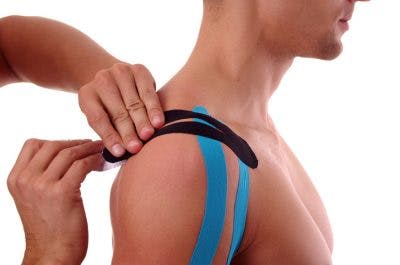
When shoulder pain is caused by poor positioning of the shoulder, taping can temporarily improve this to relieve pain. This technique is great for preventing shoulder pain, too. Work with a therapist to learn how to tape your affected shoulder correctly.
Using a shoulder brace for subluxation
If your shoulder pain is caused by shoulder subluxation, then a brace may help.
Subluxation at the shoulder can occur in people with hemiplegia after stroke. A combination of shoulder weakness plus gravity’s pull on the arm as it hangs at your side causes the arm to separate from the joint.
These braces reposition the arm so that its weight does not worsen subluxation at the shoulder. Talk to your therapist to see which shoulder braces may benefit you.
Positioning Techniques
Positioning techniques are effective in people with limited movement and strength in the affected arm. When this occurs, there is an increased risk for contractures, shoulder subluxation, and pain.
Your therapist will be able to show you how to correctly position the arm to avoid these negative outcomes. They may also recommend using pillows or certain slings to support your arm at home.
Medication
Some medications contribute to pain relief after stroke. Talk to your doctor to see if there are medications that may benefit you.
Your doctor may prescribe some medications like analgesics (pain relievers), anti-inflammatory medication, or antispastic drugs.
The type of meditation best suited for you depends on the cause of your shoulder pain, so it’s best to consult both your doctor on this one.
Botox

Keep It Going: Download Our Stroke Recovery Ebook for Free

Get our free stroke recovery ebook by signing up below! It contains 15 tips every stroke survivor and caregiver must know. You’ll also receive our weekly Monday newsletter that contains 5 articles on stroke recovery. We will never sell your email address, and we never spam. That we promise.