


Post Stroke Pain Management: Effective Ways to Make the Hurting Stop
If you’re looking for the best post stroke pain management methods, you came to the right place.
First, it’s important to understand the different types of post-stroke pain so that you know what you’re dealing with. Then, you can explore various treatments options.
Below you will find everything you need to know about post stroke pain management.
Types of Post Stroke Pain
Let’s start with the different types of post-stroke pain:
- Central post-stroke pain. This chronic pain stems from damage to the central nervous system. It can manifest as intense freezing or burning sensations. As one of the most chronic forms of post stroke pain, it often happens years after stroke. Mild sensations, like a light breeze across the skin, can feel like sharp, intense pain.
- Shoulder subluxation. This occurs when the shoulder begins to “drop” out of the shoulder socket, causing pain from the dislocation.
- Frozen shoulder. This occurs when the shoulder joint “freezes” and locks in place, usually causing pain in the beginning stages of the condition.
- Spasticity. When muscles become stiff and tight after stroke, it’s because the muscles cannot receive signals from the brain. In response, they tighten and lead to pain or contractures.
- Contractures. When spasticity worsens, it can lead to contractures, which are often painful. Contractures make it very difficult for the individual to make any purposeful movement with the affected extremity.
- Neuropathic pain. Many people suffer from neuropathic pain due to changes in the brain after stroke. Neuropathic pain can be chronic in nature and is also referred to as central post-stroke pain (CPSP).
It’s important to work with a medical team to identify the cause of your post-stroke pain so that you can treat it effectively.
Now that you know the types of post stroke pain, let’s discuss ways to manage it.
Post Stroke Pain Management
Below you will find some of the best post stroke pain management options. If any sound hopeful, then talk with your medical team to see if it’s a good fit for you.
1. Physical Therapy
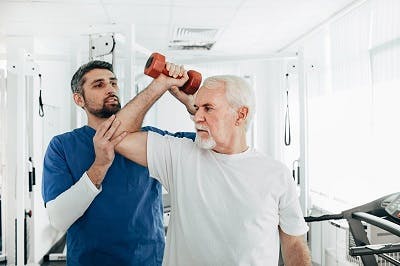
One of the best pain management tools is physical therapy because it helps “get the brain on board.”
Physical therapy helps the brain rewire itself (through neuroplasticity) so that it can correctly send signals to your affected muscles again. This can help ease pain related to spasticity and shoulder problems.
Unfortunately, central post stroke pain often does not respond very well to physical therapy. But there is hope in other solutions below.
2. Electrical Stimulation
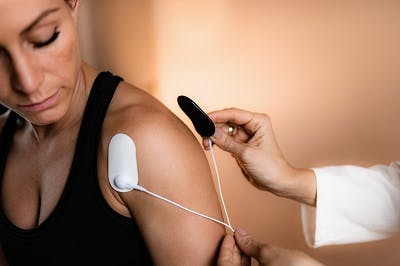
Physical therapy can be even more effective when paired with electrical stimulation, which means applying electrical currents through electrodes placed on skin to reduce pain signals.
Every type of post stroke pain may benefit from electrical stimulation — even central post stroke pain and neuropathy.
Specifically, some patients with central post stroke pain may benefit from a special hi- and lo-TENS therapy (a form of electrical stimulation).
Consult with your doctor or therapist before trying it.
3. Adaptive Equipment
For shoulder pain, arm slings can help by relieving strain on the shoulder ligaments. It’s important to continue physical therapy though, without treatment, the pain will only worsen over time.
4. Botox
If your post stroke pain is mostly caused by spasticity, then Botox may help. Botox is an FDA-approved treatment for spasticity that temporarily loosens up stiff muscles after stroke.
Afterwards, you’re encouraged to continue physical therapy to benefit from the improved mobility after Botox. Usually, you will need repeat treatments because the Botox will eventually wear off.
However, by participating in physical therapy, you’re getting the brain on board. This means that you’ll retain some of the gains even after the Botox wears off.
5. Medication
Medication can be an effective post stroke pain management technique. Your doctor can identify the best pain medications for your unique condition.
While central post stroke pain is less responsive to medication, anticonvulsant drugs like gabapentin and pregabalin may help.
6. Mirror Therapy
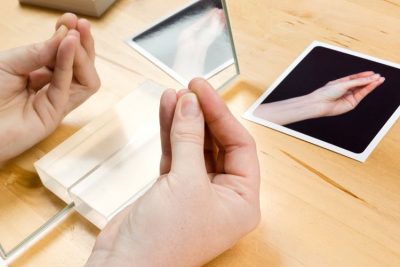
Mirror therapy can help improve mobility and reduce spasticity after stroke – especially in the arm and hand. What many people don’t know is that mirror therapy may even help central post stroke pain, too.
One study found that it helped reduce central post stroke pain in a patient 5 years after a thalamic stroke. While the study was small, this holds promise for easing central pain. Plus, this treatment is non-invasive, which makes it accessible from home.
7. Support
Living with pain is tough, to say the least, and a strong support system can help reduce or prevent emotional side effects like depression. Calling in the support of friends and family during this time is essential for recovery.
8. Distraction
Distraction can be a great post stroke pain management technique. Even though staying busy often requires painful movements, the benefits may outweigh the costs.
For example, a woman named Bree – who suffers from chronic pain much like CPSP – says that distraction is one of her most important coping mechanisms.
Even though it causes her more pain to move about and do work, it helps her feel in charge of her life, instead of feeling like the pain is in charge.
This mindset can also help you build resilience against the potential depression that may coincide with post stroke pain.
Post Stroke Pain Management: A Summary
Overall, post stroke pain originates from spasticity-related problems or nerve-related problems.
When spasticity is involved, management techniques include physical therapy, Botox, and medication.
Nerve-related pain like CPSP responds best to electrical stimulation, mirror therapy, and distraction. Talk to your medical team about the best options for you.
We hope this guide has provided hope for managing your pain after a stroke.
Photos from top to bottom: iStock/AlexRaths/peakSTOCK/microgen
Keep It Going: Download Our Stroke Recovery Ebook for Free

Get our free stroke recovery ebook by signing up below! It contains 15 tips every stroke survivor and caregiver must know. You’ll also receive our weekly Monday newsletter that contains 5 articles on stroke recovery. We will never sell your email address, and we never spam. That we promise.