

Tremors After Stroke: Causes, Diagnosis, & Treatment
Tremors after stroke are characterized by rhythmic, unintentional shaking.
However, tremors are not the only condition that can cause unintentional movement. Therefore, it’s important to work with your medical team for an accurate diagnosis.
To help you understand what’s happening, this article will walk you through the symptoms of tremors after stroke and how they differ from other motor disorders.
Then you’ll learn about the best treatments to manage and reduce tremors after stroke. Let’s get started.
Symptoms of Tremors After Stroke
Tremors involve unintentional, uncontrollable rhythmic movement in the body.
There are many different types of tremors. The one most commonly seen in stroke patients is called an essential tremor.
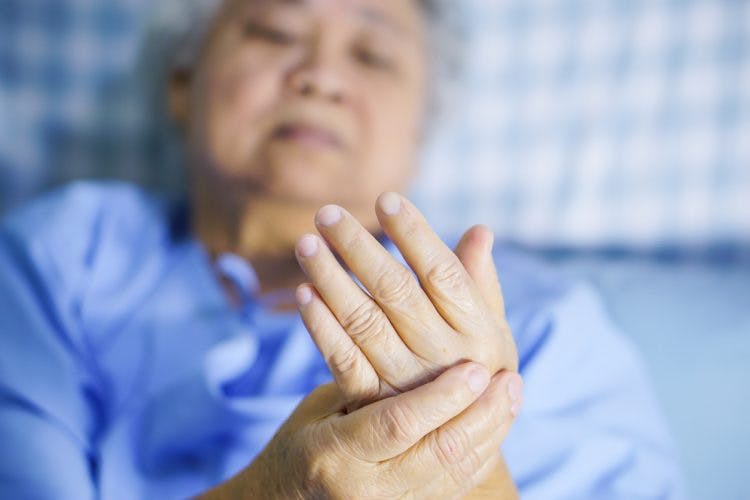
After stroke, essential tremors are most commonly seen in the hands and arms. This is when some stroke patients notice their hand shaking after stroke.
It’s important to note that tremors are different from muscle spasms and twitches, which are a sign of spasticity. Tremors are not the same as spasticity.
Furthermore, tremors can easily be confused with clonus after stroke, another type of unintentional rhythmic shaking. However, clonus can be triggered by stretching while tremors are not.
With many different types of involuntary movement disorders, it’s important to work closely with your doctor for an accurate diagnosis. An accurate diagnosis helps you receive proper treatment!
Next you’ll learn about the potential causes of tremors after stroke.
Causes of Tremors After Stroke
Tremors after stroke are not the most frequently occurring involuntary movement disorder (chorea is the most common).
But when tremors do occur after stroke, it’s often due to brain damage from a stroke in the thalamus or basal ganglia.
The basal ganglia plays a role in a variety of functions including control of voluntary movement, which also involves inhibiting competing movements that might interfere with the desired movement.
The thalamus plays a role in relaying motor signals to the cerebral cortex.
As you can see, damage to these areas of the brain can create problems with involuntary movements, like tremors.
Diagnosing Tremors After Stroke

If a stroke patient develops tremors, it usually begins months after the stroke.
Of all the involuntary movement disorders after stroke, tremor has the longest delayed onset.
Because of this delayed onset, it can be difficult to diagnose the cause of the tremors because new conditions may have developed.
For example, shaking hands after stroke could indicate a completely separate medical condition called Parkinson’s disease, which is a neurodegenerative disease that affects movement. It’s an unfortunate domino effect of neurological degeneration.
Aside from Parkinson’s disease, there are 16 other possible conditions that can cause tremors. Therefore, working with a doctor is essential to properly diagnose your condition.
If it turns out that stroke is the only cause of your tremors after stroke (and not a separate medical condition), then the following treatments can help.
Treatment for Tremors After Stroke
It’s important to note that treatment for tremors may only slow the progression.
However, there’s hope for partially or fully resolving tremors after stroke, especially since 90% of cases resolve on their own within 6 months. This is known as spontaneous recovery.
While we hope that you get to achieve spontaneous recovery, it’s important to take action to maximize recovery.
So, here are the best treatment options that you can present to your medical team to resolve tremors after stroke:
1. Physical Therapy

A physical therapist can provide exercises to improve strength, coordination, and muscle control affected by tremors.
The goal of physical therapy is to both strengthen the muscles and rewire the brain through massed practice.
By retraining the brain to properly send signals to your hand (or other affected body part), coordination may improve and the tremors may decrease.
If you don’t have access to physical therapy services, you can also perform hand therapy exercises on your own at home.
2. Medication
If your tremors don’t respond to physical therapy, you can talk to your doctor about possible medication that can help. Your doctor may prescribe anti-seizure medication, tranquilizers, or beta blockers to help reduce the shaking.
These medications are known to help with essential tremors, but not specifically stroke. Further studies are still needed for the effect of medication on tremors after stroke.
However, if you are not responding to physical therapy, medication may be worth considering.
It’s also important to note that these medications can cause unwanted side effects like fatigue and nausea. Make sure you talk with your doctor about these potential side effects.
3. Deep Brain Stimulation
While physical therapy and medication are the first line of defense against tremors, sometimes further treatment is needed.
In severe cases, deep brain stimulation may be used to treat essential tremors. During this surgical procedure, doctors insert a long, thin electrical probe to the region of the brain that causes tremors (the thalamus).
This probe is connected to a stimulator device that’s then implanted in your chest. It transmits painless electrical pulses to interrupt the signals from the thalamus that might be causing the tremors.
Deep brain stimulation is an invasive, risky procedure, therefore it’s only used in severe cases.
However, it’s a promising treatment that has been useful in more than 70% of patients with post-stroke tremors or other involuntary movements.
4. Botox Injections

While Botox is a popular (short-term) treatment for spasticity after stroke, it’s also used to treat tremors in some cases.
However, Botox is contra-indicated for hand tremors as it can cause weakness in your fingers.
To determine whether Botox is effective for hand tremors after stroke, further studies are needed.
If this treatment option appeals to you, talk with your neurologist or physical therapist.
5. Behavioral Relaxation Training
An alternative treatment for tremors is behavioral relaxation training. This form of relaxation training focuses on labeling sensations along with therapist feedback.
Since stress and anxiety can worsen tremors, this alternative form of therapy may help.
6. Baclofen
Baclofen is a muscle relaxing drug that is commonly used for spasticity after stroke. Some stroke patients report improvement in their tremors after taking Baclofen.
If you struggle with both spasticity and tremors after a stroke, then it could be worth trying Baclofen to see if it improves either condition. Talk to your doctor to see if it’s a good fit for you.
Understanding Tremors After Stroke
Overall, tremors after a stroke involve uncontrollable, rhythmic shaking movements that often affect the hand and arms, but can occur anywhere in the body.
Tremors have a delayed onset, and they can also be caused by other conditions like Parkinson’s disease. Therefore, it’s essential to work with your doctor for accurate diagnosis.
Every stroke is different, so the best treatment plan varies from person to person.
Talk with your therapist to come up with a treatment plan tailored to your recovery.
Keep It Going: Download Our Stroke Recovery Ebook for Free

Get our free stroke recovery ebook by signing up below! It contains 15 tips every stroke survivor and caregiver must know. You’ll also receive our weekly Monday newsletter that contains 5 articles on stroke recovery. We will never sell your email address, and we never spam. That we promise.