

Temporal Lobe Stroke: What to Expect on the Road to Recovery
Do you know someone that has suffered a temporal lobe stroke and wonder what to expect? A stroke in the temporal lobe can affect many important functions like memory, language, and emotion.
Every stroke is different, and each patient experiences side effects differently. Some temporal lobe stroke survivors may only struggle with memory while others have completely different symptoms.
While this is not a definitive guide, you will learn the most common side effects of a stroke in the temporal lobe, and the recovery process.
Causes of Temporal Lobe Stroke
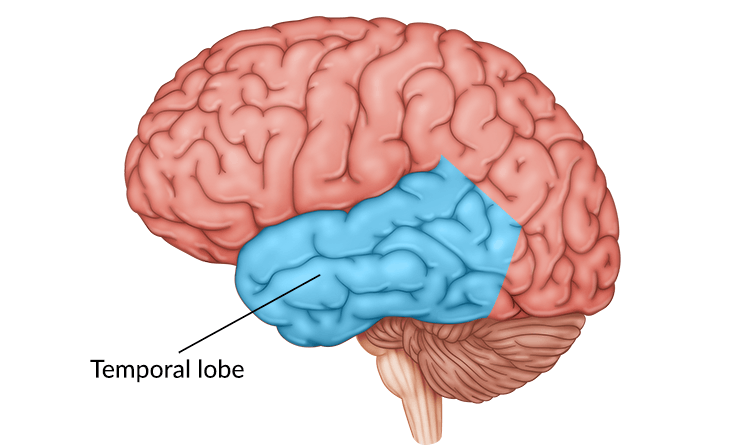
The temporal lobe is the 2nd largest lobe in the brain. It’s located behind the ears and comprises the lower region of the brain.
Temporal lobe strokes are caused when a blood vessel in the temporal lobe becomes clogged (ischemic stroke), or bursts in this area (hemorrhagic stroke).
Blood is rich in oxygen, which fuels cellular activity. When the brain doesn’t receive a sufficient supply of blood, those brain cells start to die. A stroke is a medical emergency and it is crucial to receive medical attention as soon as possible to restore blood flow to the brain and decrease the severity of side effects.
The side effects sustained after a temporal lobe stroke depend upon the speed of treatment, the size of the stroke, and other factors.
Side Effects of Stroke in the Temporal Lobe
The side effects of a temporal lobe stroke affect the function of the temporal lobe, which includes memory, language, and emotion.
Here are the 6 most common symptoms and side effects of a temporal lobe stroke:
1. Poor Memory
The hippocampus is a structure located inside the temporal lobe that is primarily responsible for learning and memory. A stroke in the temporal lobe can affect past memories and the ability to learn and retain new information.
2. Inability to Recognize Faces (Prosopagnosia)

The temporal lobe also plays a large role in perception. As a result, some temporal lobe stroke survivors experience a condition called prosopagnosia. With this condition, they may not be able to recognize faces, even of family members.
Experts believe this occurs due to impaired memory and perception skills after injury to the temporal lobe from a stroke.
3. Impaired Speech (Fluent Aphasia)
The temporal lobe spans across both sides of the brain, and it’s divided into two halves, similar to the rest of the brain (referred to as the brain’s left and right hemispheres).
If a stroke occurs in the dominant side of the temporal lobe, it may affect the Wernicke’s area. This part of the brain controls verbal and visual language skills.
When this area has been damaged by stroke, the survivor may struggle with speech difficulties known as aphasia. Specifically, they may sustain Wernicke’s aphasia, which is also called fluent aphasia.
With fluent aphasia, the survivor may be able to speak fluently but may use the wrong words. Here’s a video of a stroke patient that suffers from Wernicke’s aphasia / fluent aphasia:
4. Difficulty with Depth Perception
While most visual disturbances after a stroke occur when the visual cortex has been damaged, a temporal lobe stroke may also cause problems with perception. Some temporal stroke survivors experience difficulties with depth perception or experience field cuts.
With a field cut, the patient cannot see their field of vision on the affected side. Field cuts are different from hemineglect.
5. Trouble with Sound
Temporal lobe strokes can impair one’s ability to process and recognize sounds because the primary auditory cortex is located in the temporal lobe.
The brain needs to derive meaning from sounds in order for them to have significance. Temporal lobe stroke survivors may experience difficulties recognizing sounds or locating where they’re coming from.
6. Emotional and Behavioral Changes
The amygdala is located inside the temporal lobe and is responsible for emotional responses. Interestingly, a stroke in the temporal lobe can affect emotion in different ways.
Some may experience more aggressive behavior after a stroke while others may become more passive. This illustrates how every stroke is different, even when it occurs in the same area of the brain.
Instead of trying to predict which emotional or behavioral changes stroke patients may experience, it’s best to take action to address what does happen.
Next, we will discuss the various ways your rehabilitation team may address these different side effects.
Rehabilitation for Temporal Lobe Strokes

Because temporal lobe strokes affect every brain differently, treatments will vary based on the symptoms experienced by each individual.
Here are some types of therapy that may help recovery after temporal lobe stroke:
- Speech therapy may guide stroke survivors to overcome all types of aphasia including Wernicke’s aphasia. Practicing specific speech therapy exercises helps patients relearn the particular language skill that was impaired.
- Cognitive training may improve memory in some patients While memory is not guaranteed to improve, cognitive training is known to improve recognition, which may help patients recognize faces again.
- Vision restoration therapy may improve vision after stroke. While more research is needed in this area, Novavision is a new and emerging concept.
- Positive psychology can help retrain the brain to experience more positive emotions. If a temporal lobe stroke produces negative emotional changes, positive psychology trains the brain to experience better emotion. The book Healing & Happiness After Stroke is an educational resource. If you would like to learn more.
- Psychotherapy may also benefit survivors of temporal lobe stroke. It may provide new ways of coping with significant life changes and difficult emotions after stroke.
- Audiologists can fit you with a hearing aid if you struggle with impaired hearing after a stroke. A speech-Language pathologist may provide recommendations or other methods to improve hearing after stroke.
These rehabilitation methods promote recovery through the phenomenon of neuroplasticity: the brain’s ability to continually adapt and reassign functions affected by a stroke to healthy regions of the brain.
Neuroplasticity is activated by massed practice. While one or two therapy sessions may not provide results, consistent stimulation may help temporal lobe stroke patients regain lost skills.
There are many therapies and treatments available to recover from a temporal lobe stroke. Talk to your therapist for recommendations or continue your own research online.
Temporal Lobe Stroke: Key Points
Temporal lobe stroke may affect the ability to recognize faces and form memories. It can also result in “fluent aphasia” where the patient can speak fluently but their words get mixed around.
While the side effects of a stroke in the temporal lobe may feel confusing to patients and caregivers, there is hope for recovery through neuroplasticity and rehabilitation. By stimulating the brain with therapeutic activities, survivors may help regain lost function.
Experiment with different therapies until you find the ones that work best for you. We hope this article helped you better understand what to expect after a temporal lobe stroke.
Keep It Going: Download Our Stroke Recovery Ebook for Free

Get our free stroke recovery ebook by signing up below! It contains 15 tips every stroke survivor and caregiver must know. You’ll also receive our weekly Monday newsletter that contains 5 articles on stroke recovery. We will never sell your email address, and we never spam. That we promise.