

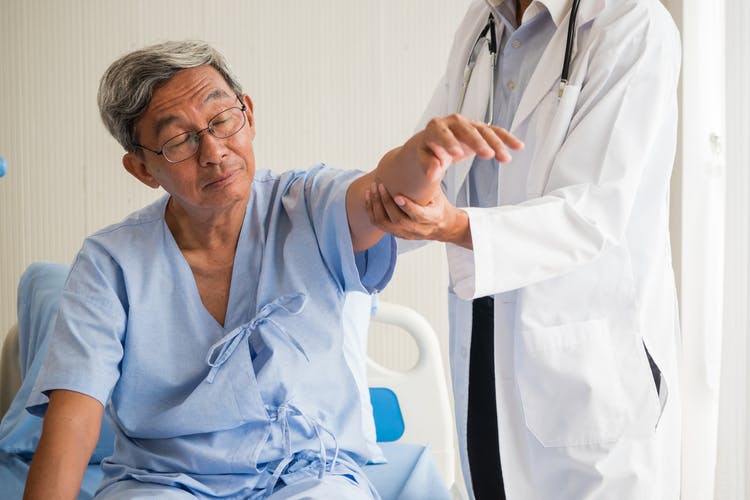
Learned Nonuse: What Happens When Survivors Neglect Their Affected Side
Learned nonuse occurs when an individual suppresses the use of their affected limb, often after a stroke has impaired movement on that side. If the condition persists, it can lead to muscle atrophy and loss of motor and sensory function.
Since this condition can progressively worsen function, it is important to learn ways to avoid it. This article will help you better understand what learned non-use is and how to prevent it.
What Is Learned Nonuse?
Learned nonuse typically occurs as a result of hemiparesis, which involves weakness on one side of the body. To compensate, the stroke survivor will often use their unaffected side for most activities.
Unfortunately, by not using their affected side, their function on that side will deteriorate until it is effectively paralyzed. Therapists refer to this as learned nonuse.
If a stroke survivor’s non-dominant side is affected, learned nonuse can become more problematic. Most people are right-side dominant. When a stroke weakens the left (non-dominant) side of the body, it’s easier for patients to subconsciously avoid using the left side, slipping into patterns that promote learned nonuse.
There’s actually a name for this phenomenon: unilateral neglect. This refers to a condition wherein a stroke survivor loses awareness of their affected side. Unilateral neglect can occur on the right or left, but left-side neglect is more common. With left neglect, the person does not make a conscious decision to only use their right hand, they simply do not even recall their left side exists.
However, no matter the cause of learned nonuse, the end result is the same: decreased motor and sensory functions.
How to Prevent and Treat Learned Nonuse
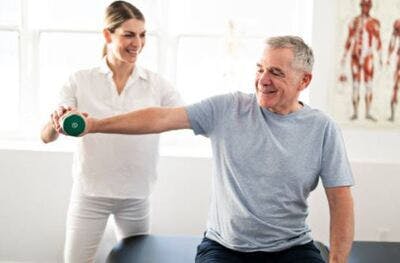
The best way to prevent learned nonuse after a stroke is to treat the underlying cause. You can do this by activating the brain’s neuroplasticity.
Neuroplasticity refers to the brain’s ability to reorganize neural pathways in response to repetitive practice. This enables the brain to transfer functions previously controlled by damaged areas to other, healthy regions.
After a stroke, the neural connections between the brain and muscles can become weakened or destroyed. This explains why a patient might lose strength in their hand following their stroke. Engaging the brain’s neuroplasticity allows a person to rebuild those neural connections and regain control of their muscles.
However, stroke patients can face a difficult dilemma here. Neuroplasticity is primarily activated through intensive exercise, but exercising your affected arm is almost impossible if you have learned nonuse.
Fortunately, therapists have devised an effective treatment to address this problem.
Using Constraint-Induced Movement Therapy to Reverse Nonuse
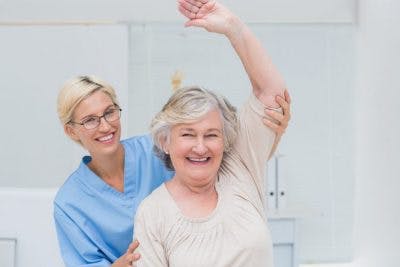
Constraint-induced movement therapy (CIMT) is an intervention designed to prevent and treat learned nonuse after stroke. It involves the application of behavioral-analytic techniques to motor deficits. Specifically, it works by forcing the stroke survivor to activate their neglected arm by constraining their unaffected arm.
The hope is that by exercising the affected arm, neuroplasticity will kick in and the person will regain full function. To constrain the unaffected arm, a therapist might have you wear a mitt to prevent you from using your hand. This forces you to use your weaker hand.
For CIMT to have its intended effect, patients must practice it more than once or twice a week. Because the goal is to activate neuroplasticity, you will need to use your affected arm as often as possible. That’s why many therapists instruct their patients to continue wearing a mitt on their strong arm for up to 90% of their waking hours, even at home.
However, wearing a restraint alone for an extended period does not enhance the treatment results, according to one pilot study. Rather, patients must engage in functional, intensive exercise as well.
This is where home exercise programs like Flint Rehab’s FitMi really shine. It encourages patients to exercise on a regular basis. Because of this functional, intensive exercise, patients with hemiplegia or hemiparesis are often able to regain mobility.
All this goes to show, that when you use your affected side, the brain will respond and improve the affected side. As the therapy saying goes: “use it to improve it!”
Overcoming Learned Nonuse After Stroke
Learned nonuse is a serious but common secondary effect of stroke. Fortunately, it is treatable.
The key to preventing learned nonuse is to move (and try to functionally use) your affected side at least a bit every day. This will engage neuroplasticity and help rebuild the neural connections to your muscles.
If learned nonuse has already set in, constraint-induced movement therapy can help. Talk to your physical or occupational therapist for more information on CIMT and for specific exercises you can try at home.
Keep It Going: Download Our Stroke Recovery Ebook for Free

Get our free stroke recovery ebook by signing up below! It contains 15 tips every stroke survivor and caregiver must know. You’ll also receive our weekly Monday newsletter that contains 5 articles on stroke recovery. We will never sell your email address, and we never spam. That we promise.