


9 Major Areas of the Brain Affected by Stroke: How Location Impacts Effects & Recovery
There are 9 major areas of the brain that can be affected by stroke. Each area of the brain controls different functions, and everyone’s brain is wired a bit differently.
Therefore, the effects of a stroke greatly vary from person to person. This is why therapists and doctors frequently say, “Every stroke is different, so every recovery will be different.”
You’re about to learn which areas of the brain can be affected by stroke, along with common secondary effects. It’s not a foolproof formula by any means, but it provides a rough idea of what to expect from each type of stroke.
Before we discusses the areas of the brain affected by stroke, we’ll discuss what a stroke is and the difference between cortical and subcortical strokes.
What Is a Stroke?
A stroke occurs when the supply of blood in the brain becomes compromised. This can happen by either a blood clot obstructing an artery and stopping blood flow to an area of the brain (called an ischemic stroke) or an artery in the brain bursting and leading to bleeding inside the brain (called a hemorrhagic stroke).
During a stroke, the affected areas of the brain do not receive enough oxygen-rich blood. As a result, brain tissue begins to die. Depending on the area of the brain affected by stroke, this damage will cause changes in certain sensory, motor, or cognitive functions.
Although it’s impossible to revive dead brain cells, recovery is possible through neuroplasticity. This process allows healthy parts of the brain to take over the functions damaged by stroke.
The goal of stroke rehabilitation is to restore or compensate for the secondary effects sustained to your highest potential. These effects vary from person to person based on the size and location of the stroke.
Next, we will discuss the different areas of the brain affected by stroke so that you can better understand what to expect.
Cortical Strokes vs Subcortical Strokes
Before we dive into the different areas of the brain affected by stroke, you should know the difference between cortical vs subcortical strokes.
The cerebral cortex/cerebrum is a large part of the brain that includes 4 lobes: the frontal lobe, parietal lobe, occipital lobe, and temporal lobe. Strokes in these regions are known as a cortical strokes.
Aside from the cerebrum, there are subcortical structures that lie deep within the brain. Strokes in these areas of the brain are also known as subcortical strokes.
The arteries that supply the subcortical areas of the brain are smaller and more delicate. As such, a hemorrhagic subcortical stroke can occur when these delicate arteries rupture due to high blood pressure or other complications. When an ischemic stroke occurs in the subcortical regions, it’s referred to as a lacunar stroke.
There are many differences between cortical and subcortical strokes. For example, cortical strokes often impact higher level functioning; and it’s uncommon for subcortical strokes to result in language difficulties.
We will discuss other patterns next!
Areas of the Brain Affected by Stroke and Symptoms
Below, you’ll learn about the different parts of the brain that can be impacted by stroke. You will find a short summary of the effects of each type of stroke, and you can click the link in each section to learn more.
The effects of a stroke will vary from person to person, so it’s best to reference a full list of the secondary effects of stroke to get an even better idea of what to expect after stroke.
Here are the major areas of the brain that can be affected by stroke:
1. Frontal Lobe Stroke
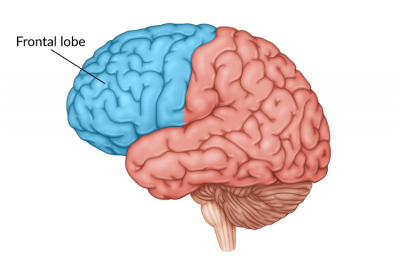
Almost one third of the cerebrum is comprised of the frontal lobe. It should be no surprise that the frontal lobe plays a role in many functions. Motor skills, executive functioning, speech, language, and social skills are all controlled, in some part, by the frontal lobe.
Effects of a frontal lobe stroke (a type of cortical stroke) include motor impairments, problem solving and judgement issues, behavioral changes, and difficulty with speech (aphasia, dysarthria, or apraxia of speech), among others.
Learn more about frontal lobe stroke »
2. Parietal Lobe Stroke
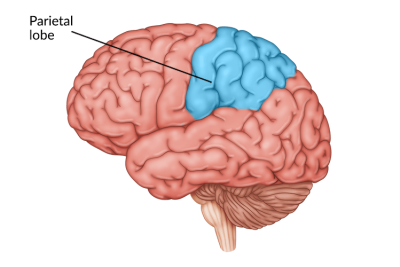
A parietal lobe stroke mostly affects sensory interpretation along with language skills and spatial awareness. Some secondary effects of this cortical stroke include hemineglect, difficulty writing (agraphia), difficulty reading (alexia), difficulty speaking (aphasia), and more.
Learn more about parietal lobe stroke »
3. Temporal Lobe Stroke
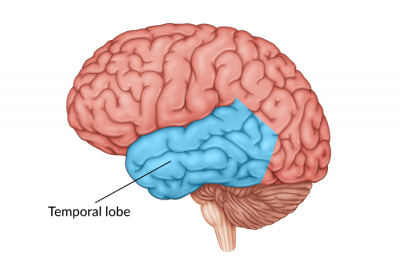
The temporal lobe, also part of the cerebrum, is an area of the brain that controls language comprehension, hearing and other sensory processes. A temporal lobe stroke may affect hearing, vision, and speech comprehension, along with other secondary effects.
Learn more about temporal lobe stroke »
4. Occipital Lobe Stroke
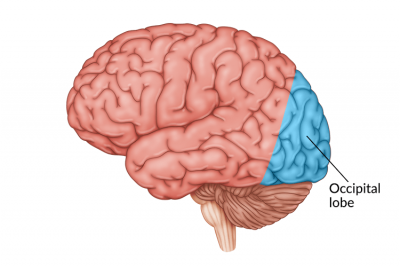
The occipital lobe, the final type of cortical stroke, plays a large role in your vision. As a result, and occipital lobe stroke often results in vision difficulties like central vision loss, cortical blindness, visual hallucinations, or other secondary effects.
5. Brain Stem Stroke
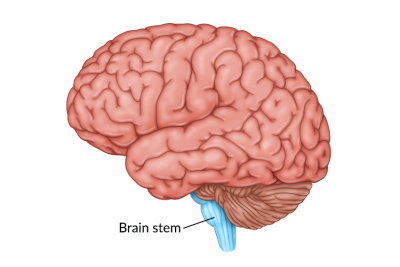
The brain stem is comprised of the midbrain, pons, and medulla oblongata. A stroke in any of these areas is considered a brain stem stroke.
The brain stem controls basic body functions like breathing, sweating, and consciousness. Therefore, common changes caused by a brain stem stroke include coma, difficulty breathing, and difficulty swallowing (dysphagia), among other secondary effects.
Learn more about brain stem stroke »
6. Cerebellar Stroke
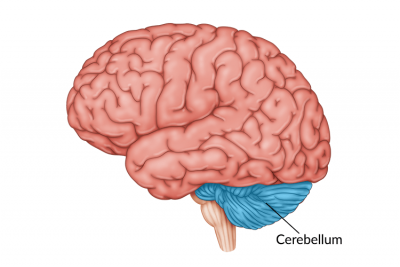
A stroke in the cerebellum is called a cerebellar stroke. The cerebellum controls some sensory functions and voluntary movements (especially balance and coordination). Effects of a cerebellar stroke may include ataxia, balance issues, and sensory issues, among others.
Learn more about cerebellar stroke »
7. Thalamic Stroke
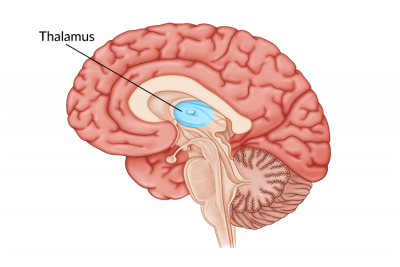
When a stroke affects the thalamus, it’s called a thalamic stroke. One of the biggest effects of a thalamic stroke are sensory issues because the thalamus relays 98% of all sensory input. Numbness and sensory issues are extremely common after a thalamic stroke. Central post stroke pain, a chronic type of pain, is also common after a thalamic stroke.
8. Basal Ganglia Stroke
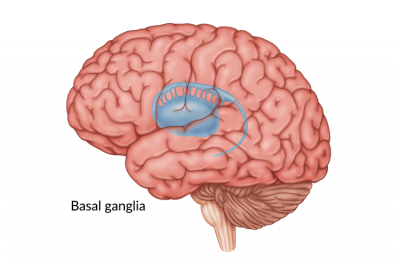
The basal ganglia are most associated with emotion, voluntary muscle control, cognitive function, and memory. Therefore, basal ganglia strokes often result in emotional blunting, post-stroke depression, and motor impairments, among other effects.
Learn more about basal ganglia stroke »
9. Internal Capsule Stroke
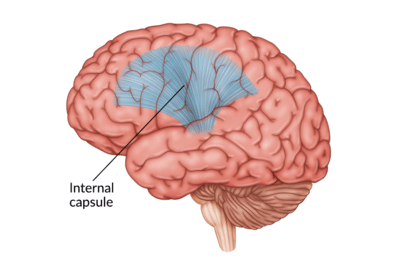
The internal capsule is another region that lies deep within the brain. It plays a large role in movement. Therefore, motor impairments are the most common effect of an internal capsule stroke. If motor impairments are the only secondary effect, then this type of stroke is also known as a pure motor stroke.
Left Hemisphere vs Right Hemisphere Stroke
Along with different lobes and structures, the brain is also divided into two halves, called hemispheres.
Aside from the different areas of the brain that can be affected by stroke, it’s also helpful to look at difference between the two hemispheres.
Generally speaking, the left hemisphere controls language and logical reasoning; while the right hemisphere is believed to control creativity and object recognition. This is why language difficulties after stroke are often associated with left hemisphere strokes.
Furthermore, each hemisphere controls movement on the opposite side of the body. Usually, a left hemisphere stroke will cause motor impairments on the right side of the body; while a right hemisphere stroke will likely impair the left side of the body.
When stroke impacts both hemispheres, it’s possible to sustain motor impairments on both sides of the body.
The Location of the Stroke Impacts Recovery
If you are a stroke survivor, it’s important to talk to your neurologist. Ask him/her about the location of your stroke, as it may help you to identify and understand what secondary effects to expect.
Once you understand the location and effects of your stroke, rehabilitation can proceed with more efficiency.
The stroke recovery process is unique to each individual because every stroke is different. The most important thing to do is never give up hope.
Keep pursuing rehabilitation so that you can get as close to a full recovery from stroke as possible.
Keep It Going: Download Our Stroke Recovery Ebook for Free

Get our free stroke recovery ebook by signing up below! It contains 15 tips every stroke survivor and caregiver must know. You’ll also receive our weekly Monday newsletter that contains 5 articles on stroke recovery. We will never sell your email address, and we never spam. That we promise.