

Exercise After Stroke: Why It Matters & What the Latest Guidelines Recommend
shop-mgr2023-01-11T15:31:07+08:00The best exercise after a stroke varies from person to person. While strength-training programs are usually recommended, some patients should prioritize gait training first. But who?
Every stroke is different, and every patient sustains different secondary effects. This impacts the type of exercise that will be most beneficial for each patient.
Therefore, every stroke survivor should talk to their therapist for the best recommendations. Before you have that conversation, it helps to know the benefits and types of exercises to choose from.
Why Exercise After Stroke Is Important
Exercise after stroke is critical for two main reasons: rehabilitating the physical effects of a stroke and preventing another stroke from happening.
Often, a stroke leads to physical impairments such as hemiplegia or hemiparesis: weakness or paralysis on one side of the body. These impairments increase the risk of falling after stroke and reduce efficacy with the Activities of Daily Living. Therefore, a customized post-stroke exercise regimen should be created to help improve safety and independence.
Stroke prevention is another reason why exercise after stroke is important. Stroke is usually not an isolated incident, and risk factors often precede the stroke – such as high blood pressure, high cholesterol, diabetes, and obesity. Fortunately, all of these conditions can be improved with exercise.
While exercise is necessary for good health and recovery after stroke, it’s important for patients to avoid overexercising. Pushing the body too hard can potentially result in regression or exacerbate conditions like post-stroke fatigue. Stroke patients will see the best results with a balanced regimen created with the help of a therapist.
To get an idea of which exercises your medical team may recommend, let’s look at the latest guidelines.
Guidelines for Exercise After Stroke
The best exercises after stroke depend upon your unique ability levels and preexisting medical conditions. Many patients receive recommendations that prioritize stroke rehabilitation and stroke prevention.
Here are the current best practices as recommended by the American Heart Association:
- Gait training exercises should be a top priority to help patients get back to “prestroke” levels of activity as soon as possible. Gait training can help improve independence with the Activities of Daily Living and improve tolerance for prolonged physical activity. Gait training is something that your physical therapist will need to help you with.
- Aerobic exercise should also be prioritized to help prevent another stroke. Experts recommend aerobic exercise after stroke for 20-60 minutes per day, 3-7 days per week. Dosage should be adjusted based on the patient’s level of fitness.
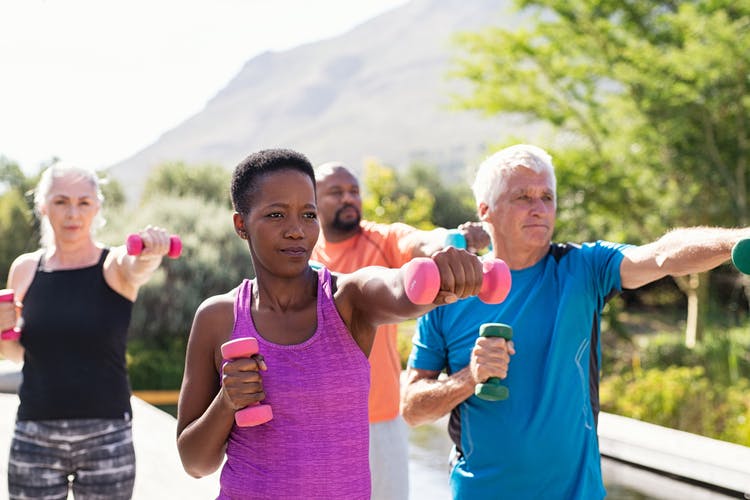
- Strength-training exercise is recommended to reverse muscle atrophy, which typically occurs during the hospital stay and days thereafter. Strength-training programs should include light weights that allow at least one set of 10-15 repetitions. Strength-training should be performed 2-3 days per week with 8-10 exercises involving major muscle groups.
- Stretching and range-of-motion exercises are recommended to help improve flexibility and prevent contractures (a progressed condition of extremely stiff, tight muscles after stroke).
- Balance exercises and core exercises are recommended for patients at risk of falling.
It’s important to work with your medical team to set your post-stroke exercise goals.
For instance, some patients may need to prioritize gait training to develop the motivation for consistent aerobic exercise. Other patients with mild secondary effects might be able to accommodate both gait training and other forms of aerobic exercise.
No matter what your doctor or therapist recommends, one thing remains true throughout the stroke recovery process: consistency and repetition matter.
Why Repetition Matters
Some therapists refer to rehabilitation exercises as neuromuscular training, which focuses on training the nerves and muscles to communicate.
After a stroke disrupts the pathways between the brain and muscles (resulting in impaired movement patterns), neuromuscular training can help restore movement by activating neuroplasticity.
Neuroplasticity is the brain’s natural ability to reorganize itself and learn new skills. This is how stroke patients can recover lost abilities like walking, dressing, and moving about your daily life.
When discussing the best exercises after stroke with your therapist, you may hear them refer to something called massed practice. This refers to a large number of repetition used to stimulate neuroplasticity.
The brain requires intense repetition to learn new skills because it likes to be efficient. When something is done frequently, it lets the brain know that task is important, and the brain responds by making that task easier to accomplish.
Many therapists emphasize massed practice to help encourage as much neuroplasticity as possible.
Getting Ready for Exercise After Stroke
It’s important for stroke patients to work with their healthcare providers to develop an exercise plan that accommodates their unique side effects and fitness levels.
Doctors and therapists will likely encourage a unique combination of aerobic exercises to help prevent another stroke along with neuromuscular training to help recovery.
For an extra boost, try gamified rehab equipment like Flint Rehab’s FitMi home therapy, which is designed to help patients with neuromuscular training at home.
Flint Rehab also has a free ebook with stroke recovery exercises that you can download below:
Keep it Going: Get a Free Rehab Exercise Ebook (25 page PDF)

Get our free ebook filled with 25 pages of rehab exercises featuring photos of licensed therapists. Sign up below to get your copy!
When you sign up, you’ll also receive our popular Monday newsletter that contains 5 articles on stroke recovery.
We never sell your email address, and we never spam. That we promise.