


How to Fix Foot Drop: Understanding the Steps Toward Recovery
shop-mgr2023-01-10T18:24:30+08:00To understand how to fix foot drop and promote recovery, it first helps to understand the various causes and symptoms of foot drop.
Foot drop refers to the inability to lift the front part of the foot, known as ankle dorsiflexion, and is often caused by a neurological injury like stroke or TBI. Foot drop can make it difficult to walk and perform daily activities. It can also increase the risk of tripping, falling, or further injury.
Fortunately, foot drop can often improve through a proper rehabilitation plan that helps activate neuroplasticity – the nervous system’s ability to naturally rewire and heal itself. Although the road to recovery looks different for everyone, there are many effective ways to improve foot drop.
This article will discuss how to fix foot drop and maximize your chances of recovery.
What Is Foot Drop?
The ability to lift the foot toward the shin is known as dorsiflexion. Foot drop is associated with weakness in the muscles that perform ankle dorsiflexion, and is most often a result of nerve damage. As a result, many individuals with foot drop may have difficulty walking, maintaining balance, and safely navigating around.
Foot drop is generally caused by the weakness or paralysis of muscles. However, specific causes of foot drop depend on the type of injury and severity.
Some of the most common causes of foot drop include:
- Brain & Spinal Cord Injuries: which most often includes stroke, cerebral palsy, multiple sclerosis, lumbar spine nerve root damage, and Charcot-Marie-Tooth disease.
- Peripheral Nerve Damage: which can occur from sports injuries, diabetes, hip or knee replacement surgery, childbirth, excessive time in a leg cast, and/or spending long hours sitting cross-legged or squatting.
- Muscle Disorders: these conditions often include muscular dystrophy, polio, and amyotrophic lateral sclerosis (Lou Gehrig’s disease).
When the brain sustains a neurological injury like a stroke or TBI, the areas of the brain responsible for activating the muscles in the front of the shin can become impaired. As a result, the brain is unable to send the appropriate nerve signals to the muscles to tell the foot when to contract or relax, resulting in foot drop.
Signs & Symptoms of Foot Drop
Foot drop makes it challenging to lift the front part of your foot, which can affect your gait (your manner of walking). As a result, your foot or toes may drag on the floor when you walk or perform daily activities.
Depending on the cause of your foot drop, it can affect one or both of your feet. Impaired dorsiflexion can make it difficult to walk on uneven surfaces, maintain balance, or climb up a couple of stairs.
To maximize your chances of recovery, it helps to understand the signs and symptoms of foot drop. Symptoms of foot drop may be constant or intermittent with brief periods of normal foot strength in between.
Common signs and symptoms of foot drop include:
- Tripping or falling
- Limp foot or toe drag
- Numbness or weakness
- Decrease in muscle mass around the shin and foot
- High steppage gait: characterized by raising the thigh up and taking big, marching steps when walking
- Circumduction gait: where the leg swings to the side during a step instead of flexing the knee and ankle
- Vaulting gait: pushing up onto the toes of the opposite foot to help lift the body and give more room to bring the affected foot through for a step
Although the list above is lengthy, it does not indicate that an individual with foot drop will have all these effects. Depending on the severity, some may experience very few of these symptoms, and others may experience the majority of them.
Nonetheless, if you are experiencing any new or recurring symptoms, it’s important to speak with your doctor. They can assess your symptoms and provide you with an accurate diagnosis and a proper treatment plan.
How Neuroplasticity Can Help Fix Foot Drop
Treatment for foot drop depends on the cause. When the root cause is successfully treated, foot drop may improve and even disappear. However, if left untreated, foot drop can worsen over time. That is why rehabilitation is incredibly important.
When foot drop is caused by a neurological injury, the root cause is the miscommunication anywhere along the pathway between the brain and the affected muscles. The best way to address this root cause is to practice high repetition of rehab exercises and activate neuroplasticity.
Neuroplasticity helps strengthen unaffected neural pathways (connections) and create new ones. This helps improve communication between the brain and the affected muscles. With better communication, the brain can send appropriate signals once again and tell the muscles to move. Thus, neuroplasticity is essential for foot drop recovery.
The best way to activate neuroplasticity and fix foot drop is to practice high repetition of foot drop exercises. When a movement such as dorsiflexion is practiced regularly, the brain begins to recognize that movement and strengthen its neural connections. The more a movement is practiced, the more neuroplasticity will strengthen the neural pathways for that movement, eventually making it easier to execute.
Neuroplasticity addresses the root cause of foot drop and also other symptoms that usually accompany it such as weakness and numbness. Therefore, it’s important to stay consistent and practice high repetition of foot drop exercises.
Your therapist can provide you with numerous rehab exercises that are safe and suitable for you. You can also try home therapy programs to help you stay consistent in between your therapy sessions and boost your chances of recovery.
How to Fix Foot Drop: Additional Treatment Options
Consistent practice of foot drop exercises and movement training provides the brain with the stimulation it needs to relearn the skill of lifting the front of the foot, or dorsiflexion. However, while rehabilitation is the most effective way to fix foot drop after a neurological injury, some individuals may benefit from a combination of other treatments.
Additional treatments of foot drop can include:
Splints or Braces
Therapists often recommend wearing an ankle foot orthotic, or AFO brace, to help support your foot and ankle. AFOs help prevent the toes from dragging on the floor, which helps improve your gait, increase how much you’re walking and moving, and lower the risk of tripping or falling.
Functional Electrical Stimulation
Functional electrical stimulation treatment involves sending small electrical impulses to the affected muscles of the foot to help create a contraction when it’s supposed to during the movement. Reactivating these muscles helps engage neuroplasticity and encourage dorsiflexion. Functional electrical stimulation is different from the more common transcutaneous electrical stimulation (TENS) units that do not elicit a muscle contraction and are used to help with pain.
Surgery
Severe cases of foot drop may require surgical interventions such as nerve transfers or decompressive surgery. Although these treatments can help improve dorsiflexion, they are highly invasive and should only be considered once all other options have been exhausted.
Medication
Medication may also help treat the symptoms of foot drop. Because treatment will depend on the exact cause of your foot drop, be sure to consult with your doctor to find the most appropriate treatments for your condition.
Utilizing the Right Steps to Fix Foot Drop
How to fix foot drop will depend on the root cause of your condition. Although there are various potential underlying causes, one of the most common is a neurological injury like a stroke and TBI.
When the nervous system is affected, it can disrupt the communication between the brain and the affected muscles. Fortunately, this can be improved by activating neuroplasticity through high repetition of foot drop exercises.
We hope this article helped you understand how foot drop can be improved through a proper rehabilitation plan. Be sure to grab our free ebook below with plenty of foot drop recovery exercises to help you get started.
You’re on a Roll: Get Free Foot Drop Exercises in a Beautiful PDF!
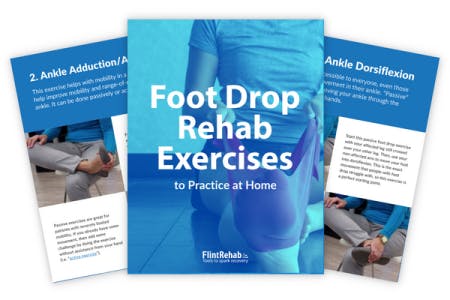
Get our free ebook filled with 14 pages of foot drop exercises featuring photos of licensed therapists. Sign up below to get your copy! We never sell your email address, and we never spam. That we promise.