


Can Foot Drop Be Cured without Surgery?
shop-mgr2023-01-10T11:55:20+08:00A common question is, can foot drop be cured without surgery? The short answer is yes. Surgery is a last-resort treatment for foot drop. Before resorting to surgery, there are other rehabilitation techniques for foot drop that you should try first.
In this article, we will discuss 3 alternative treatments for foot drop. But before we dig in, let’s discuss why and when surgery should be considered for foot drop.
Surgery for Foot Drop: How & When?
Foot drop is a condition that impairs your ability to perform dorsiflexion – the act of flexing your foot back toward your shin. This condition often occurs after a nerve injury or neurological condition such as stroke.
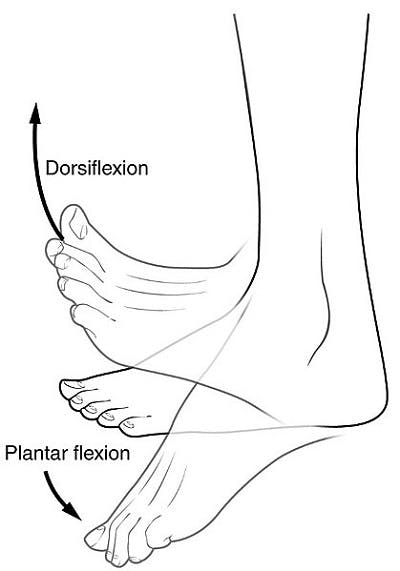
Image from Wikipedia
There are interventions available for foot drop. The most invasive option involves a surgical procedure called a tendon transfer.
During a tendon transfer for foot drop, a working tendon in the leg is moved and attached to other areas in the leg that make dorsiflexion possible. The surgery helps improve mobility in the foot by replacing the non-functioning tendons with working tendons.
Some therapists suggest that if foot drop has not improved after one year of treatment, then surgery can be considered. This is an invasive and permanent procedure, which is why it’s considered a last-resort treatment.
Most therapists encourage exhausting other rehabilitation methods first, and we’ll dig into those next.
Other, Non-Invasive Rehab Techniques for Foot Drop
Before considering surgery for foot drop, try to pursue rehabilitation on a regular basis for at least one year.
With hard work and consistency, many individuals can regain movement in the foot without resorting to surgery.
Let’s look at alternative treatments for foot drop after neurological injury.
1. Rehab exercise to rewire the brain
The best way to treat foot drop naturally is to retrain the brain to activate the muscles that control dorsiflexion again.
The brain already knows how to do this through the process of neuroplasticity, where the brain forms new neural pathways based on what you repeatedly practice. Although you cannot perform dorsiflexion now, you can retrain your brain to do so with foot drop exercises.
Foot drop exercises involve movements like dorsiflexion to retrain the brain how to lift the front of your foot. The more you practice foot drop exercises, the more your dorsiflexion will improve.
Each time you repeat the foot drop exercises, you strengthen the new neural pathways in your brain that control dorsiflexion. The more you practice, the more efficient your brain will get at controlling dorsiflexion.
Foot drop exercise is the most natural, non-invasive, effective way to heal foot drop.
2. Electrical stimulation for foot drop
Results can come slowly with foot drop exercises; so if you want to speed up your results, try combining exercise with electrical stimulation (e-stim).
E-stim works by attaching electrode pads to your affected muscles and providing gentle electrical stimulation.
The electricity sends signals to your brain that says, “Hey! There are muscles here! Let’s get things moving.” This will help activate neuroplasticity even faster.
This is a clinically proven practice.
3. Ankle foot orthotics (braces)
Because foot drop increases your risk of falling, it’s recommended to use an AFO to improve your safety.
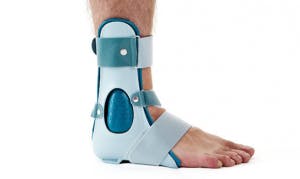
An AFO is an orthotic device used to control foot and ankle movements, as well as prevent the toes from dragging due to foot drop.
While AFOs greatly improve your safety and gait (manner of walking), it’s considered to be a compensation tool. It does not send any signals to your brain and it does not facilitate healing.
Since AFOs are a form of compensation, they do not encourage active movement of the weakened foot and ankle muscles. This can lead to learned nonuse, and it’s where the occupational therapy phrase “use it or lose it” comes from.
Don’t let that warning discourage you from using an AFO during your activities of daily living to improve your safety. AFOs are useful and should be used, especially if recommended by your therapist.
To combat learned nonuse, dedicate time every day to using your foot and doing foot drop exercises. This will prevent learned nonuse while rewiring the brain to improve dorsiflexion.
How to Cure Foot Drop without Surgery
The first line of defense against foot drop is rehab exercises. Performing high repetition of therapeutic foot drop exercises will help rewire the brain and improve dorsiflexion.
Results can come slowly though. If you want to speed things along, consider adding e-stim to your regimen. In the meantime, it can be a great decision to use an AFO to improve your safety and balance.
Remember that AFOs are a crutch and, while they should be used for your safety, don’t neglect your rehab exercises. They address the root problem and are the ultimate cure.
You’re on a Roll: Get Free Foot Drop Exercises in a Beautiful PDF!
Get our free ebook filled with 14 pages of foot drop exercises featuring photos of licensed therapists. Sign up below to get your copy! We never sell your email address, and we never spam. That we promise.