

Somatosensory Cortex Damage: Symptoms, Treatment, and Recovery
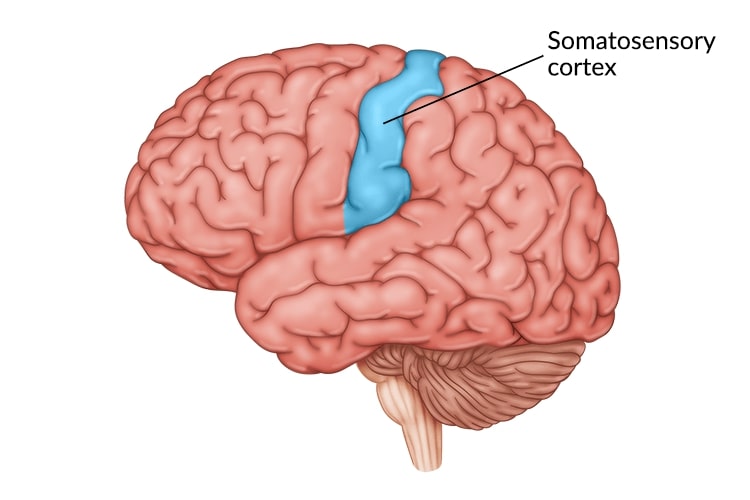
The somatosensory cortex is the area of the brain responsible for processing sensory input from the body. It lies next to the primary motor cortex, which helps control purposeful movement. When the somatosensory cortex sustains damage, this can result in sensory deficits and, due to its location, can even affect movement and balance. Thankfully, individuals with somatosensory cortex damage can work to improve their function and quality of life through rehabilitation.
In this article, you will learn more about somatosensory cortex damage, secondary effects, and how these effects can be rehabilitated.
What Is the Somatosensory Cortex?
The somatosensory cortex is responsible for processing all bodily sensations. These sensations come from receptors found throughout the body that detect temperature, pain, touch, weight, and proprioception (your awareness of the location, movement, and action of your body).
Each section of the somatosensory cortex is arranged so that a particular area receives sensory information from a certain part of the body. Areas of the body that are more sensitive, such as the hands and lips, take up more space in the cortex than others.
This is illustrated in the cortical sensory homunculus, which is a visual representation of the proportions of the brain dedicated to sensory function for different body parts:

As you can see, large amounts of the cortex are dedicate to the face and hands, which means that these areas are more vulnerable to impairment after somatosensory cortex damage.
The somatosensory cortex lies within the parietal lobe on a ridge of the cerebral cortex called the postcentral gyrus. This region of the brain contributes to proprioception, telling your brain how your body is moving or positioned. Therefore, an individual with somatosensory cortex damage may not only develop sensory impairments, but may also present with motor impairments linked to poor proprioception, such as loss of balance and coordination.
Secondary Effects of Somatosensory Damage
Damage to the somatosensory cortex can occur due to TBI or stroke and can cause a variety of effects, depending on where the damage occurs. Every brain injury is different, and every person’s brain is uniquely wired. This means every person with somatosensory cortex damage will experience the effects differently, too. For example, some survivors may sustain a number of secondary effects while others may notice only mild or few effects.
Common secondary effects of somatosensory cortex damage include:
Numbness or Paresthesia
Somatosensory cortex damage can result in numbness or tingling/prickling sensations (paresthesia) in certain parts of the body, depending on where the damage occurred. Since the face and hands have the most receptors and take up the largest area of the cortex, they are most vulnerable to numbness and/or tingling.
Each hemisphere of the brain generally controls movement and sensation on the opposite side of the body. For example, the sensation of the left side of your body is controlled by the somatosensory cortex in the right hemisphere of your brain. Therefore, when sensory issues occur after somatosensory cortex damage, these impairments will present on the side of the body opposite the damage.
Injury to the somatosensory cortex can also impair an individual’s ability to detect heat or cold sensations. This poses a safety risk because the survivor may not be able to recognize when a surface is dangerously hot, such as an electric stove burner.
Impaired Localization
Since the somatosensory cortex is responsible for processing sensory input, injury to this area can cause problems with identifying where on the body a sensation is occurring. The individual might be able to recognize that a feeling is coming from their hand or arm, but they may not be able to pinpoint the specific location. In severe cases, the survivor may not be able to locate where the sensation is coming from at all.
Loss of Proprioception
Proprioception refers to the ability of the brain to recognize where the body is oriented in space. For example, this function is what allows people to walk without constantly watching their feet. Proprioception also makes you aware that your arms are moving when you walk.
This function is controlled by sensory receptors located in the muscles, joints, and tendons. These receptors detect various input, such as movement speed and muscle stretch, and send this information to the brain for processing.
After damage to the somatosensory cortex, however, this function can become diminished and, as a result, actions such as balancing, walking, and even reaching can become more difficult.
Individuals with proprioceptive problems are also more vulnerable to muscle injury, such as sprains or tears, because they cannot sense when their muscles are being over-stretched.
Agraphesthesia and Tactile Agnosia
Much like impaired localization, somatosensory cortex damage can cause difficulties with recognizing things traced on the skin. For example, a person with this problem would not be able to tell whether an X or an O was traced on the palm of their hand.
People with this disorder often also have trouble identifying an object by touch alone. If their eyes are closed, they cannot tell if they are holding a fork, a pen, or a book. It all feels the same. This is known as tactile agnosia.
Treating Somatosensory Cortex Damage
Many of the effects of somatosensory cortex damage involve sensory changes or motor difficulties. Fortunately, the brain is capable of healing and rewiring itself through neuroplasticity. As survivors work towards recovery, the brain can make adaptive changes and potentially improve its ability to process sensory input, increase proprioception, and/or effectively move the affected muscles.
Here’s an overview of the two major types of therapy that can help survivors rehabilitate after somatosensory cortex damage:
Sensory Reeducation
Sensory reeducation, also known as sensory retraining, is a form of therapy that helps retrain the brain to process sensation. This technique works by exposing the individual to repetitive sensory stimuli to spark neuroplasticity and encourage adaptive changes in the brain.
For example, if you struggle with numbness after somatosensory cortex damage, you can try doing a temperature differentiation exercise. With the help of a caregiver or therapist, soak one washcloth in cold water and one in hot (but not too hot) water. Then, alternate placing the cloths on the affected areas and try to determine the temperature.
Even if you cannot feel anything initially, sensory reeducation exercises like these help stimulate the brain and encourage adaptive changes. It can take many weeks or months of consistent practice to notice results. Try to practice for about 15 minutes a day to encourage improvements in sensory effects such as numbness or paresthesia. Your occupational therapist is an excellent resource for sensory stimulation activities, too.
Proprioceptive Training
When survivors experience a loss of proprioception after somatosensory cortex damage, activities that involve balance, such as walking, putting on pants, or stepping up a curb, can become difficult. It can also increase the risk of falling and further injury. Therefore, it’s essential to work with a physical and/or occupational therapist to address this problem in order to maximize recovery and promote safety during daily activities.
Your therapist will take you through a series of training exercises that will target your proprioceptive skills. For example, your therapist may ask you to stand on one foot while holding onto something for safety. This exercise will likely be challenging if you have a loss of proprioception, and it will send positive stimulation to the brain to help retrain the somatosensory cortex.
Your therapist can also help you incorporate other beneficial therapies to improve proprioception, such as passive or active exercise, electrical stimulation, and vibration therapy. These techniques provide additional stimulation to the brain, and research has shown that a combination of techniques appears to be the most effective way to maximize recovery.
Overcoming Somatosensory Cortex Damage
After somatosensory cortex damage, some survivors experience sensory impairments or movement-related effects such as numbness, tingling, or poor balance. Fortunately, through rehabilitative therapies like sensory retraining and proprioceptive training, it is possible to recover at least some of your sensory and/or motor function.
Improvements in the effects of somatosensory cortex damage are thanks to neuroplasticity-the brain’s ability to heal and rewire itself after injury. Your therapist is an excellent resource for exercises that help target your unique symptoms and stimulate positive changes in the brain.
Keep it going: Do you know these 15 essential TBI recovery tips?
If you like our content, you’ll love our ebook and newsletters! Get instant access to our TBI recovery tips ebook with 20 pages of helpful advice by signing up below.
You’ll also receive our emails that share survivor stories and more useful TBI recovery tips, which you can opt out of at any time. (We know you’ll love them, too.)
We will never sell your email address, and we never spam. That we promise.