


15 Helpful Cognitive Rehabilitation Exercises to Sharpen Your Mind
Cognitive rehabilitation exercises are a great way to improve and preserve cognitive function after TBI.
In this article, we are going to cover some of the best cognitive exercises for TBI you can do at home to sharpen your mental skills.
Benefits of Cognitive Exercises for TBI Patients
Just as your body needs exercise to stay healthy, your brain needs to stay active in order to preserve function. Stimulating your brain through activity causes more neurons to fire, which helps keep your brain operating properly.
After a TBI, it is especially important to exercise your brain so that you can engage neuroplasticity, which is your brain’s natural ability to rewire itself.
You can do so by practicing several different cognitive rehabilitation exercises that challenge your brain to think in unique ways, causing it to create new neural pathways.
These new pathways will help you strengthen many cognitive skills, such as memory and recall, and even regain some skills you may have lost — like speaking after brain injury.
Attention and Concentration Exercises for TBI Patients
The first category of cognitive rehabilitation exercises we’ll cover are attention and concentration exercises. These exercises can improve your ability to focus and pay attention to more than one thing at a time.
Some of these exercises will require help from another person such as a caregiver or family member:
1. Repeat Numbers and Letters
Caregiver, say a list of letters or numbers in a slow, steady tone of voice and ask the person who has suffered the brain injury to make a mark on the paper every time they hear a certain number or letter.
2. Rhythm Matching

One person should tap out a simple, two-step rhythm several times with their hand on the table (tap-delay-tap-tap). The person with the injury should try to match the rhythm.
If this seems too easy, both of you should turn your chairs around so you are not facing each other. This way you must focus with only your auditory processing.
3. “Add 3, Subtract 7”
Pick any 2-digit number, then add 3 to that number three times.
Next subtract 7 from that final number, then repeat.
This exercise is great because your brain must attend to and hold on to several details at once. It also helps you get better at processing and organizing information.
4. Practice Fine Motor Exercises
Practicing fine motor skills is a great way to improve cognitive function after TBI, especially if these skills have been impaired. Some fine motor exercises you can try are:
- Stacking pennies
- Therapy putty exercises
- Stretching rubber bands
- Jigsaw puzzles
You can even try learning a musical instrument, which has extra benefits for TBI recovery.
5. Use Your Non-Dominant Hand

If possible, try to use your non-dominant hand during daily activities every once in a while.
For example, brush your hair with your left hand instead of your right hand one day a week.
This not only engages a different side of your brain, it also stimulates your neurons to fire in a new way, which strengthens cognitive function.
6. Sit Outside and Journal
Sit outside, and write down everything you see, hear, and smell. This engages areas of the brain that are not usually active and will help improve your concentration.
If you have difficulty writing, you can also speak what you observe out loud. The important thing is to just pay close attention to your surroundings.
Cognitive Rehabilitation Exercises for Memory Skills
The following exercises can be used to help you improve memory function:
7. Picture Recall
Caregivers, place two different cards from a deck of playing cards face up and let the person view them for 5 seconds. Turn the cards face down.
Now ask them to point to the cards that are named (e.g. “point to the Queen”). Every once in a while ask for a card that was not shown.
Increase the number of cards to a max of 5 as the person progresses.
8. Naming Therapy
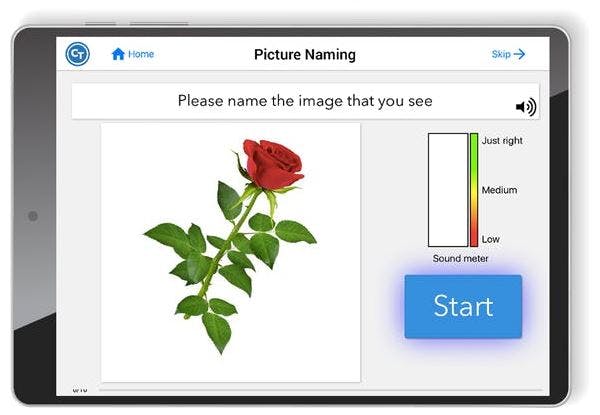
This cognitive exercise is often used to help people suffering from aphasia recall words, but it’s also a great way to improve memory in general.
One good naming therapy exercise is to have someone else write down several general categories (such as tools, animals, plants, countries, occupation, foods, sports, etc.)
Then try to remember and name (verbally or in writing) as many items in that category as possible.
For caregivers, if the patient gets stumped, you can give hints. For example, if they can’t come up with any animal names, you can tell them to think of a farm or zoo, etc.
9. Grocery List
Have someone go to the grocery store with you and tell them to choose 2 or 3 food items.
Then, go and find those items without writing down what the person said. As you improve you should increase the number of items you must memorize, until you can recall 7 items.
10. Card Recall
Select four playing cards in sequence (3 of clubs, 4 of clubs, 5 of clubs) and place in random order face up. After five seconds turn the cards face down.
Then turn the cards over in sequence (3, then 4, then 5).
As you improve increase the number of cards in the sequence, allowing one more second of view time for each card added, to a maximum of 7 cards.
Problem Solving and Strategy Cognitive Rehabilitation Exercises
The following cognitive rehabilitation exercises can be used to help you improve your problem solving and planning skills:
11. Making Change

Caregivers, give the person some coins and ask them to tell you which coins would add up to 35 cents, 54 cents, etc.
12. Color Sudoku
Color Sudoku stimulates similar pattern and logic areas of the brain as number Sudoku does, but is easier for people who might still have trouble manipulating numbers.
13. Tower of Hanoi
The Tower of Hanoi is a great mathematical puzzle that can improve several cognitive abilities.
The puzzle consists of three rods and at least 3 disks. (The more disks there are, the harder the puzzle is.)
The goal of the puzzle is to move all the disks over from the first rod to the third without having a larger disk end up on top of a smaller one.
This not only engages the logic and problem solving areas of your brain, it also requires you to plan ahead and strategize, which helps train executive functions.
14. Chess, Sudoku, and Crossword Puzzles
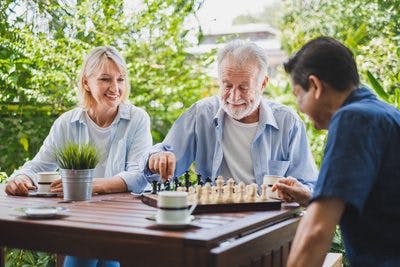
Chess and other brain-stimulating games like Sudoku and crossword puzzles are great for activating the left side of your brain and improving your problem-solving skills.
Crossword puzzles are especially helpful for developing word recall skills.
15. Cognitive Therapy Games
You can use cognitive exercise apps to motivate yourself to exercise your brain frequently. The more you practice cognitive exercises, the sharper your mental skills will become.
To supplement outpatient speech therapy and see greater results between sessions, you can use the CT Cognitive Therapy App to access over 100,000+ cognitive rehabilitation exercises.
It’s a great fit for TBI patients that want to improve memory, critical thinking, and speech.
And there you have it! We hope you find these cognitive rehabilitation exercises for TBI recovery useful.
Keep it going: Do you know these 15 essential TBI recovery tips?
If you like our content, you’ll love our ebook and newsletters! Get instant access to our TBI recovery tips ebook with 20 pages of helpful advice by signing up below.
You’ll also receive our emails that share survivor stories and more useful TBI recovery tips, which you can opt out of at any time. (We know you’ll love them, too.)
We will never sell your email address, and we never spam. That we promise.