

Posterior Tibial Tendonitis
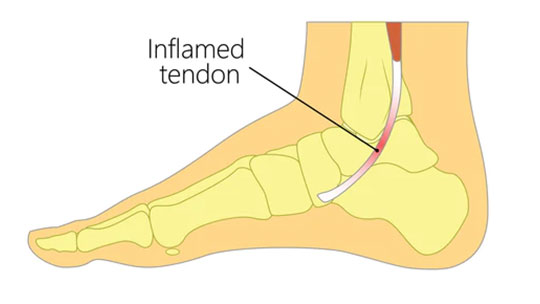
The Posterior Tibial Tendon runs from your calf muscles, behind your inside ankle bone, and attaches underneath the navicular bone (the bone in the middle of your foot), which gives your arch support. When the Posterior Tibial Tendon becomes weak or loose your arch can collapse which leads to pain and flatfoot.
WHAT CAUSES POSTERIOR TIBIAL TENDONITIS?
- Improper or excessive physical activity
- Past injuries such as an ankle sprain or other trauma
- Past ankle surgery
- Obesity: too much pressure causes excessive wear and tear on the tendons
HOW DO I KNOW IF I HAVE POSTERIOR TIBIAL TENDONITIS?
WHAT ARE THE SYMPTOMS OF POSTERIOR TIBIAL TENDONITIS?
- Pain along the back and inside of the foot and ankle
- Flattening or collapsed arch
- Toes begin to point outward
- Inability to point the toes inward
- Limited range of motion in the ankle
- Unsteady gait
- Inability to raise your heel (can’t stand on your toes.)
HOW IS POSTERIOR TIBIAL TENDONITIS DIAGNOSED?
- Physical examination
- MRI
WHAT CAN I DO FROM HOME FOR POSTERIOR TIBIAL TENDONITIS?
WHAT CAN I DO TO PREVENT POSTERIOR TIBIAL TENDONITIS?
- Wear shoes with firm soles that support your arch
- Stop any physical activity immediately if you feel pain
WHAT TREATMENTS CAN I DO FROM HOME FOR POSTERIOR TIBIAL TENDONITIS?
- Rest – Get off your injured foot as soon as possible. Relieving weight and pressure will help your foot heal faster and avoid further injury. You may want to consider wearing a walking boot for a few weeks in order to allow your Posterior Tibial tendon sufficient time to rest.
- Ice – Rest or wrap your injured foot with ice as soon as possible. Ice helps prevent swelling and promotes faster healing time. Wrap the ice in a towel and avoid putting ice directly on the skin.
- Compress – Immobilize the injured foot with a bandage or ankle brace. This gives your ankle stability and protects it from further injury. Make sure you don’t wrap your foot or ankle too tightly. You don’t want to cut off the blood supply to your foot.
- Elevate – Make sure you keep your foot elevated as this will also help to minimize swelling. It’s best if you can elevate your foot to the level of your heart.
- Anti-inflammatory medication
WHEN SHOULD I SEE A DOCTOR FOR POSTERIOR TIBIAL TENDONITIS?
WHEN SHOULD I SEE A DOCTOR FOR POSTERIOR TIBIAL TENDONITIS?
While most mild cases of Posterior Tibial Tendonitis can be taken care of from home you should see your doctor if your symptoms become worse and your foot becomes swollen and painful. You should also follow up with your doctor if you notice that your arches are falling
TREATMENTS YOUR DOCTOR MAY RECOMMEND FOR POSTERIOR TIBIAL TENDONITIS
Non-Surgical:
- Rest is the most important factor in treating Posterior Tibial Tendonitis
- Using a firm arch support in your shoe. This helps relieve the tendon’s stress and prevent a collapsed arch.
- Taking anti-inflmmatory medication
- Physical Therapy
Surgical:
Surgery is sometimes required to correct Posterior Tibial Tendonitis. There are several options for surgery:
- The surgeon can remove inflamed tissue to allow the tendon to heal without complications
- The surgeon repairs the tears in the tendon by suturing the tendon back together
- In advanced cases, the surgeon may need to do some additional surgical procedures to restore the foot to a more normal position