

Hallux Limitus Rigidus
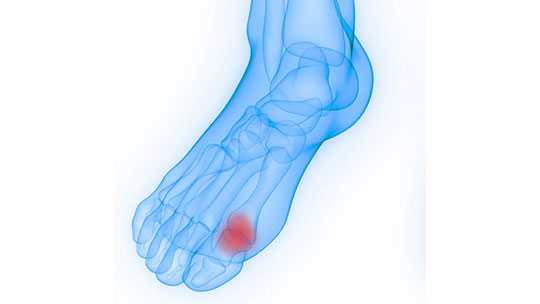
Hallux Limitus and Hallux Rigidus involve the joint that is located at the base of the big toe and causes pain and stiffness in the big toe. Being a progressive condition, the toe will become increasingly harder to bend over time.
Hallux refers to the big toe. Limitus refers to a decrease in motion of the joint (the early stage) and Rigidus referes to a joint that is rigid with very little to no movement (the later stage).
Hallux Rigidius is actually a form of degenerative arthritis.
WHAT CAUSES HALLUX LIMITUS RIGIDUS?
Common causes of Hallux Limitus Rigidus include:
- Faulty function and structural abnormalities of the foot that lead to osteoarthritis in the big toe joint
- An inherited foot type that is prone to developing the condition
- Overuse as a result of activities or jobs that increase stress on the big toe
- An inflammatory disease such as rheumatoid arthritis or gout.
- Prior history of trauma to the toe
HOW DO I KNOW IF I HAVE HALLUX LIMITUS RIGIDUS?
WHAT ARE THE SYMPTOMS OF HALLUX LIMITUS RIGIDUS?
Symptoms in the early stage, Hallux Limitus, include:
- Pain and stiffness in the big toe during use
- Pain and stiffness aggravated by cold, damp weather
- Difficulty with certain activities such as running and squatting
- Swelling and inflammation around the joint
Symptoms of the later, more advaced stage, Hallux Rigidus, include:
- Pain, even while the big toe is not in use
- Difficulty wearing shoes as a result of bone spur development
- Dull pain in the hip, knee, or lower back due to changes in the way you walk
- Limping
HOW IS HALLUX LIMITUS RIGIDUS DIAGNOSED?
A physical examination in which the physician will evaluate the range of motion of the toe, coupled with x-rays will be used to determine how much arthritis is present as well as if there are any other abnormalities.
It is important to seek out professional medical help as early as possible. Hallux Limitus/Rigidus is progressive and the sooner the condition is diagnosed the easier it is to treat and manage.
WHAT CAN I DO FROM HOME FOR HALLUX LIMITUS RIGIDUS?
WHAT CAN I DO TO PREVENT HALLUX LIMITUS RIGIDUS?
Avoid shoes with tight toe boxes and avoid high impact activites that may put excessive stress on the big toe
WHAT TREATMENTS CAN I DO FROM HOME FOR HALLUX LIMITUS RIGIDUS?
- Changing your footwear.
- Wearing shoes that are stiff or have a rocker-bottom sole may be recommended.
- Pain medication, such as ibuprofen, may be recommended to reduce pain and inflammation.
WHEN SHOULD I SEE A DOCTOR FOR HALLUX LIMITUS RIGIDUS?
If you start to experience symptoms and pain you should see a doctor as early as possible to discuss treatment and management of symptoms.
TREATMENTS YOUR DOCTOR MAY RECOMMEND FOR HALLUX LIMITUS RIGIDUS
The goal of treatment is to manage symptoms and also try to keep the condition from progressing
- Injections of corticosteroids may reduce inflammation and pain.
- Orthotic devices (usually to stiffen the shoe) may be provided by your doctor or physician.
- Physical therapy may provide temporary relief.
In some cases surgery is the only way to eliminate or reduce pain. If non-surgical treatments fail to relive pain, you and your surgeon can discuss surgical options.